Language

When evaluating power distribution options, the comparison between bus ducts and cable trays emerges as a pivotal decision. Bus ducts excel in efficiency and space optimization, offering enhanced heat dissipation and reduced operational costs. In contrast, cable trays provide flexibility and accessibility, ideal for adaptable environments. Each system has its unique advantages and challenges, making the decision highly context-dependent. Understanding these nuances is essential for optimizing infrastructure and ensuring future scalability.
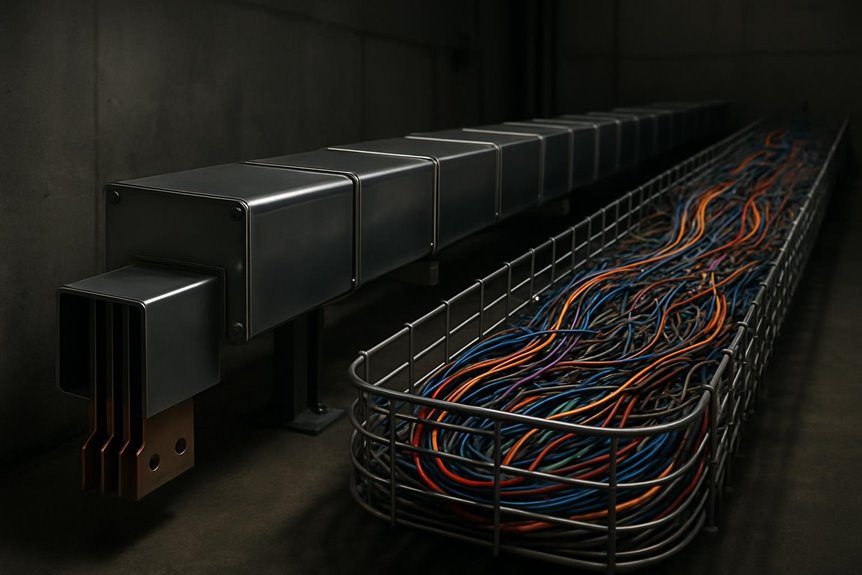
A bus duct, also known as busway or busbar trunking, is a prefabricated power distribution system utilizing solid copper or aluminum busbars within a protective metal housing.
Common types include sandwich and plug-in bus ducts, each offering unique advantages such as reduced electromagnetic interference and ease of modifications.
Key benefits of bus ducts include efficient high-current distribution, minimized space requirements, and enhanced heat dissipation, meeting standards like IEC 60439 and UL 857.
Bus duct systems are available in several configurations, each designed to meet different power distribution requirements. The right choice depends on factors such as current capacity, installation environment, available space, and future expansion needs.
Sandwich bus ducts feature conductors tightly enclosed between layers of insulation, creating a compact and highly efficient power distribution system. Their low impedance design improves heat dissipation while reducing electromagnetic interference (EMI). These systems are widely used in high-rise buildings, data centers, and industrial facilities where space is limited and reliability is critical.
Air-insulated bus ducts use air as the primary insulating medium between conductors. They offer a cost-effective solution for medium- and high-current applications while providing easier inspection and maintenance. This type is commonly installed in commercial buildings, manufacturing plants, and utility facilities where space constraints are less restrictive.
Plug-in bus ducts are designed with tap-off points that allow additional circuits, circuit breakers, or distribution units to be connected without major system modifications. Their modular design simplifies expansion and reconfiguration, making them ideal for facilities with changing power requirements, such as factories, warehouses, and data centers.
| Bus Duct Type | Key Advantages | Typical Applications |
|---|---|---|
| Sandwich Bus Duct | Compact design, low EMI, excellent thermal performance | Data centers, high-rise buildings, industrial plants |
| Air-Insulated Bus Duct | Lower initial cost, easier maintenance, flexible installation | Commercial buildings, utilities, manufacturing facilities |
| Plug-In Bus Duct | Fast expansion, modular distribution, reduced downtime | Factories, warehouses, data centers |
Selecting the appropriate bus duct system can improve power distribution efficiency, simplify maintenance, and support future facility growth while reducing overall lifecycle costs.
Harnessing the power of compact design, bus ducts offer a streamlined solution for modern power distribution. These prefabricated systems, featuring solid copper or aluminum busbars, reduce physical footprint considerably compared to cable tray applications.
The electrical busway's modular nature guarantees predictable bus duct installation, minimizing labor costs by up to 50%. Their IP-rated enclosures enhance safety, providing robust protection against dust and moisture.
In power distribution systems, bus ducts excel with lower I²R losses at high amperage, guaranteeing efficient energy transfer. The ability to implement rapid tap-offs with plug-in units further enhances operational flexibility.
While initial costs may be higher, bus duct cost comparison reveals long-term savings, making them ideal for high-capacity environments where compactness and efficiency are paramount.
Cable trays, also known as cable management systems, are open or semi-enclosed structures made from materials such as steel, aluminum, or FRP, designed to support and protect electrical cables.
Common types include ladder trays, trough trays, and wire mesh trays, each offering distinct configurations for specific routing needs.
Key advantages of cable trays include their flexibility for future modifications, ease of access for maintenance, and effective natural ventilation, making them suitable for dynamic environments.
Common Types of Cable Trays
Cable trays are widely used to support, organize, and route insulated electrical cables in commercial, industrial, and infrastructure projects. The most common types include ladder cable trays, trough cable trays, and wire mesh cable trays, each designed for different installation requirements.
Ladder cable trays feature a rung-style design that provides excellent ventilation and heat dissipation. Their high load-bearing capacity makes them ideal for heavy power cables and long cable runs in industrial facilities, power plants, and large commercial buildings.
Trough cable trays offer greater cable protection while still allowing airflow. With a partially enclosed design, they help reduce cable exposure to dust, debris, and accidental contact, making them suitable for manufacturing plants and indoor electrical installations.
Wire mesh cable trays are lightweight, flexible, and easy to modify on-site. They are commonly used for data, communication, and control cables where complex routing and frequent system changes are expected.
When comparing bus duct vs cable tray systems, it is important to recognize that cable trays serve primarily as cable management and support structures rather than power distribution equipment. Their flexibility, ease of installation, and adaptability make them a practical choice for projects requiring frequent modifications or future expansion.
Selecting the right cable tray system depends on factors such as cable quantity, load requirements, installation environment, available space, and long-term maintenance considerations.
While offering significant advantages, cable trays provide multi-circuit flexibility, making them ideal for diverse electrical distribution needs. Their lower upfront cost enhances economic feasibility, particularly for projects with budget constraints.
Cable trays facilitate easy retrofitting, allowing for efficient upgrades and expansions without significant disruptions. The design promotes natural ventilation, which aids in managing thermal performance and reducing the risk of overheating.
For environments susceptible to corrosion, the availability of Fiber Reinforced Plastic (FRP) options guarantees durability and reliability. These attributes collectively make cable trays a versatile solution, particularly in applications demanding adaptability and cost efficiency.
As a rule of thumb, cable trays are favored when flexibility, ease of modification, and lower initial investment are paramount.
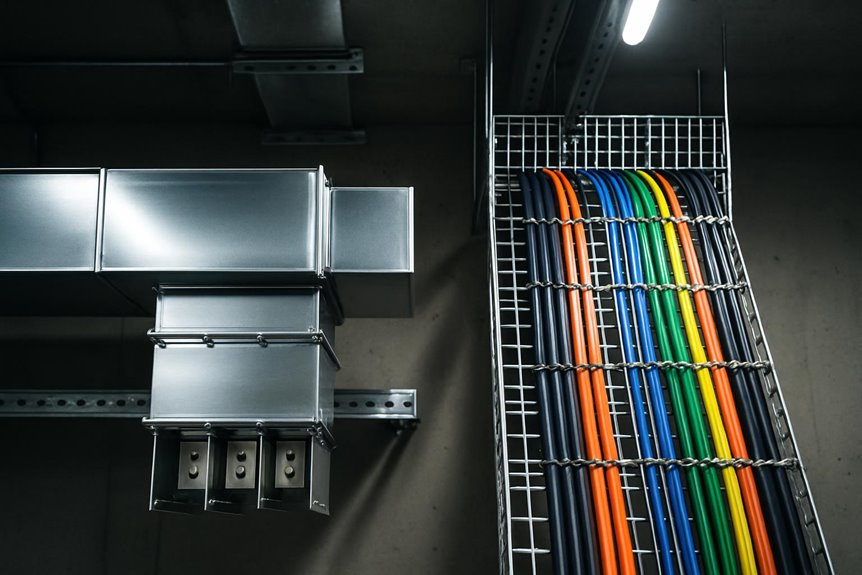
In a thorough analysis of bus ducts and cable trays, key differences emerge in their primary functions and compositions. Bus ducts optimize high-current power distribution through enclosed busbars, while cable trays focus on supporting and organizing insulated cables.
Installation requirements highlight significant labor savings with bus ducts due to their prefabricated nature, contrasting with the intensive field labor needed for cable trays.
Additionally, space utilization and heat dissipation advantages are evident in bus ducts, which offer a compact profile and superior thermal management. This influences total cost of ownership and long-term efficiency.
Bus ducts and cable trays serve distinct roles in power distribution systems, each defined by their primary function and composition. A bus duct is a prefabricated system that serves as the conductor, utilizing solid copper or aluminum busbars enclosed in a protective housing. This design allows electricity to flow directly through the busbars, offering efficient power distribution and the ability to tap power via plug-in units.
In contrast, a cable tray functions as a support mechanism for insulated electrical cables rather than as a conductor itself. Cable trays provide organized routing and support for multiple systems within a facility, offering flexibility and customization.
These differences in function and material composition fundamentally influence the selection and application suitability of each system in various power distribution scenarios.
Although both bus ducts and cable trays are integral to power distribution, their installation requirements and labor economics differ markedly.
Bus ducts, with their bolted modular sections, offer a predictable timeline and can greatly reduce labor. For installations exceeding 400 A and 30 meters, bus ducts often cut labor by 20–35%.
In contrast, cable trays require intensive labor for individual cable pulling, bend radius management, and fill calculations.
Efficiency in installation requirements sets the stage for examining the spatial and thermal dynamics of bus ducts and cable trays.
Bus ducts, with their compact cross-section, occupy up to 25% less physical space than cable trays. This advantage is particularly significant in high-density environments, where replacing cable bundles with bus ducts can reclaim 30-50% of tray space.
Regarding heat dissipation, bus ducts leverage their enclosures to efficiently dissipate heat, maintaining conductor capacity. Conversely, cable trays allow air circulation along their runs, providing an advantage in outdoor or high-ambient settings.
This dynamic underscores the importance of selecting a system based on specific environmental and spatial constraints, ensuring peak performance and reliability.
In the domain of electrical distribution, efficiency serves as a critical determinant of system viability, particularly when evaluating bus ducts against cable trays.
Bus ducts offer significant energy savings due to lower resistance and reduced I²R losses, especially at high amperages. Over 20 years, this can result in substantial energy savings, as illustrated by a potential reduction of over 15,000 kWh/year at 2,000 A over 60 meters.
Key considerations in Total Cost of Ownership (TCO) include:
Bus ducts and cable trays present distinct physical specifications that greatly influence maintenance and service life.
Bus ducts, with widths ranging from 100–1,000 mm, exhibit superior strength and durability due to robust enclosures and support spans up to 3 meters. They offer protection levels like IP54/IP65, ensuring resistance to dust and water, enhancing longevity.
Cable trays, though flexible, require regular inspections to maintain integrity, as they are more exposed to environmental factors. While bus ducts provide a longer service life with minimal maintenance, cable trays demand more frequent upkeep due to their open design.
The turning radius of cable trays can complicate installations, whereas bus ducts allow for smoother changes, reducing potential wear and tear.
| Dimension | Bus Duct (Busway) | Cable Tray System | Advantage |
|---|---|---|---|
| Primary Function | Enclosed power distribution system using busbars | Support structure for power, control, and communication cables | Different purposes |
| Typical Ampacity Range | 100 A – 6,300 A+ | Depends on cable size and quantity | Bus Duct |
| Current-Carrying Efficiency | High, with lower electrical losses | Dependent on cable design and installation | Bus Duct |
| Upfront Material Cost | Higher initial investment | Lower initial investment | Cable Tray |
| Installation Labor | Faster modular installation | More labor-intensive cable pulling and termination | Bus Duct |
| Installation Time | Shorter for high-current systems | Longer for large cable runs | Bus Duct |
| Space Efficiency | Compact footprint | Requires larger routing space for multiple cables | Bus Duct |
| Heat Dissipation | Controlled thermal design with optimized conductor spacing | Natural airflow around cables | Application-Specific |
| Future Expansion | Plug-in units available but major route changes can be complex | Easy to add or reroute cables | Cable Tray |
| Multi-Circuit Capability | Typically dedicated to power distribution circuits | Can accommodate power, control, fiber, and communication cables together | Cable Tray |
| Maintenance Access | Internal conductors enclosed and protected | Full cable visibility and accessibility | Cable Tray |
| Environmental Protection | Available with IP54, IP65, and higher ratings | Depends on cable and tray protection methods | Bus Duct |
| Corrosive Environments | Stainless steel or coated busway options available | FRP and coated trays widely used | Application-Specific |
| EMI Performance | Very low EMI, especially sandwich bus duct designs | Depends on cable shielding and separation | Bus Duct |
| Turning Radius & Routing Flexibility | Uses predefined elbows and fittings | Highly flexible routing options | Cable Tray |
| Mechanical Protection | Excellent conductor protection | Cables remain partially exposed | Bus Duct |
| Typical Service Life | 25–40+ years | 20–30 years (material dependent) | Bus Duct |
| Maintenance Requirements | Low routine maintenance | Regular cable and support inspections required | Bus Duct |
| 20-Year Total Cost of Ownership | Often lower in high-load applications due to energy savings and reduced labor | Can increase due to cable losses and maintenance | Bus Duct |
| Best Applications | Data centers, high-rise buildings, industrial plants, substations | Manufacturing facilities, cable-intensive installations, infrastructure projects | Application-Specific |
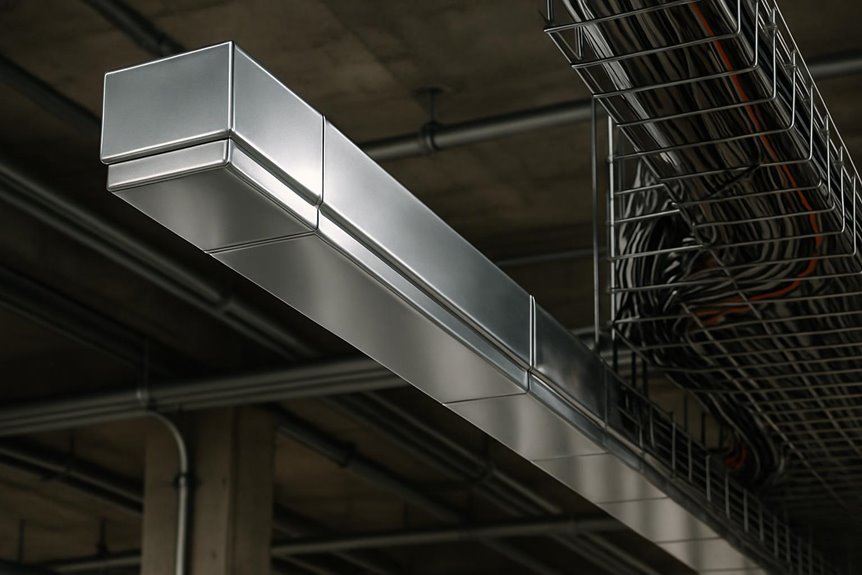
High-capacity environments often benefit from the implementation of bus duct systems. These systems are ideal for settings requiring efficient power distribution and minimal spatial footprint. Their robust design supports high-current demands and offers flexibility for future expansions.
Key performance areas include:
Cable tray systems are ideal for projects that require flexible cable routing, easy expansion, and frequent modifications. Unlike bus duct systems, which provide a fixed power distribution pathway, cable trays support a wide range of power, control, communication, and data cables. This makes them particularly valuable in facilities where electrical infrastructure is expected to evolve over time.
Their open design simplifies cable installation, inspection, maintenance, and future upgrades, reducing both downtime and labour costs. Cable trays are often preferred when large numbers of cables must be organized across long distances or multiple equipment areas.
| Application Environment | Why Cable Trays Are Preferred |
|---|---|
| Commercial Buildings | Easy cable additions and modifications during renovations or tenant fit-outs |
| Manufacturing Facilities | Supports large volumes of power, control, and instrumentation cables |
| Data Centers | Allows rapid deployment and expansion of IT and network infrastructure |
| Educational Campuses | Provides a scalable and cost-effective solution for evolving electrical systems |
| Healthcare Facilities | Improves cable organization while simplifying maintenance and future upgrades |
| Process Industries | Accommodates complex cable routing for automation and control systems |
While bus ducts are often preferred for high-current power distribution, cable trays remain the most practical solution for managing diverse cable networks in commercial and industrial environments where adaptability and scalability are critical.
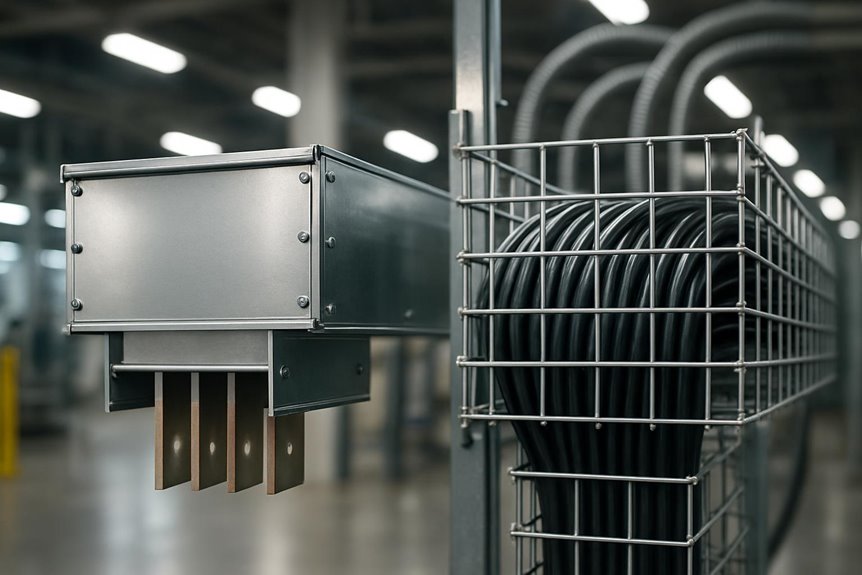
In environments that demand flexibility and adaptability, cable tray systems have proven their worth, particularly in commercial and industrial settings requiring frequent modifications.
However, cable bus systems, often overlooked, offer notable advantages over bus ducts. Cable buses use insulated power cables housed in ventilated enclosures, ideal for long spans and high-voltage applications. They provide superior adaptability in specific scenarios:
These features enable cable buses to excel where bus ducts may face limitations, offering a viable alternative for specific engineering needs.
When selecting between bus duct and cable tray systems, critical factors include electrical load requirements, available installation space, and environmental conditions.
Consideration of future expansion plans and budgetary constraints, including lifecycle expectations, plays a pivotal role in determining the most suitable option.
A thorough analysis of these elements guarantees ideal alignment with operational needs and long-term efficiency goals.
Determining the appropriate power distribution system requires careful analysis of electrical load requirements. An essential consideration involves evaluating the sustained load and the length of the run.
For installations with a sustained load exceeding 400 A on a fixed run greater than 15 meters, a bus duct is often recommended due to its efficiency in handling high current capacities. Conversely, for loads below 400 A or where mixed-circuit routing is prevalent, cable trays offer greater flexibility.
This decision matrix helps optimize performance and cost-efficiency in power distribution planning.
Considering available installation space is essential when deciding between a bus duct and a cable tray system. The spatial constraints, including ceiling height and structural clearances, play a critical role in this decision.
Bus ducts typically require straight runs or specific elbowed configurations, which may limit their adaptability in environments with complex routing needs. In contrast, cable trays offer greater flexibility, easily maneuvering around obstacles and accommodating intricate pathways.
Additionally, the physical footprint of a bus duct is generally smaller, requiring up to 25% less volume than cable trays, making them advantageous in space-constrained areas.
However, the necessity for precise planning with bus ducts must be weighed against the cable tray's ability to adjust on-the-fly, offering a more adaptable solution.
Evaluating environmental conditions is essential in selecting between bus duct and cable tray systems. Each option offers distinct advantages depending on the surrounding environment.
In corrosive, outdoor, or coastal settings, selecting a fiberglass-reinforced plastic (FRP) cable tray or a stainless steel bus duct enhances durability and resistance to corrosion.
For areas sensitive to electromagnetic interference (EMI), a sandwich bus duct provides superior shielding due to its enclosed design.
In ATEX or hazardous zones, both systems must be specified to meet strict safety standards, guaranteeing compliance and safety.
When planning for future expansion, the flexibility and adaptability of power distribution systems become pivotal factors in decision-making.
Cable trays excel in environments anticipating layout changes within five years due to their inherent reconfigurability. They allow easy modifications and rerouting, accommodating dynamic facility needs without extensive downtime.
Conversely, in scenarios with a stable and defined load profile, bus ducts offer advantages through their modular plug-in capability. This feature permits the addition of tap-off units without necessitating a complete overhaul of the main run.
Such modularity supports seamless integration of additional loads, enhancing operational efficiency. Ultimately, the choice hinges on the anticipated frequency of changes and the desired balance between immediate adaptability and structured expansion capabilities.
Budgetary constraints and lifecycle expectations are pivotal in deciding between bus duct and cable tray systems for power distribution. A thorough Total Cost of Ownership (TCO) assessment, including material, labor, energy losses, maintenance, and future modification costs, is essential.
If energy savings from a bus duct can achieve a break-even point within seven years, it typically offers superior value. When considering projects with a capital expenditure exceeding $50,000, obtaining quotes for both systems is advised.
While regulatory and standards compliance might seem like a mere formality, it plays an essential role in the selection of power distribution systems. The choice between bus ducts and cable trays must align with standards such as IEC, UL, NEMA, and GB, depending on the project's jurisdiction.
Ensuring that products conform to these specifications is vital, especially for projects involving exports or government procurement. Compliance guarantees that the systems meet safety, performance, and reliability criteria.
Unlike competitors who overlook this aspect, some manufacturers prioritize adherence to these standards, providing assurance of quality. This compliance not only facilitates smoother installation and operation but also mitigates risks associated with non-compliance, such as legal penalties or operational failures.
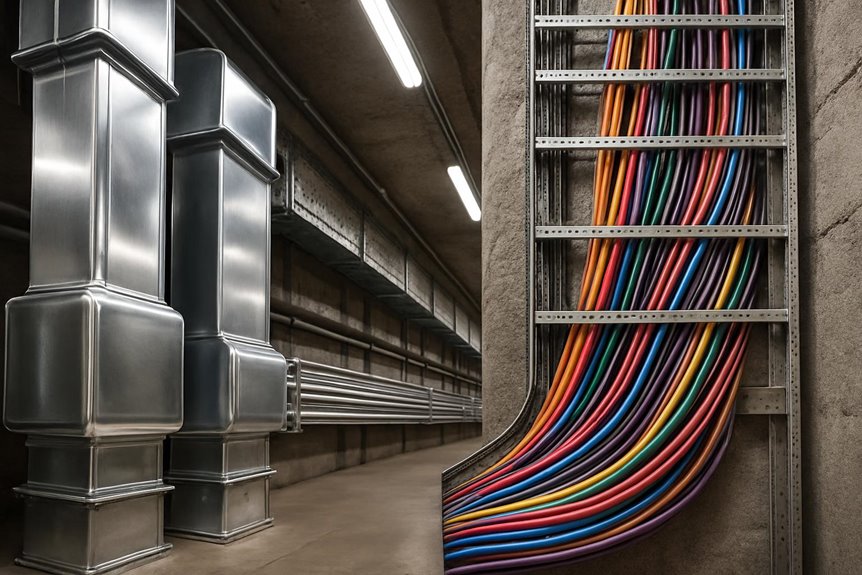
In evaluating the cost comparison of bus ducts versus cable trays, initial material and installation costs present significant differences, with bus ducts typically requiring higher upfront investment.
However, operating efficiency and maintenance costs can shift the economic balance over time, as bus ducts often offer superior energy savings and lower upkeep.
Consequently, total cost of ownership must consider long-term benefits, where bus ducts may provide an advantageous return on investment in specific applications.
Cost efficiency emerges as a critical factor when evaluating power distribution systems like bus ducts and cable trays.
Bus ducts typically incur higher initial material costs due to the use of premium materials such as copper and aluminum. However, they offer significant labor savings, particularly for high-amperage runs, due to their modular design and reduced installation complexity.
Conversely, cable trays present lower material costs but require intensive labor for cable pulling and layout adjustments.
Evaluating the operating efficiency of bus ducts versus cable trays reveals distinct differences in performance over time.
Bus ducts exhibit lower I²R losses compared to cable trays, especially at higher currents. At 1,000 A, bus ducts show a 20% reduction in resistive losses over a 20-year period, compared to cable trays. This efficiency increases at 2,000 A, where bus ducts achieve up to a 35% reduction.
Such performance metrics directly translate into energy savings, effectively offsetting the initial higher costs of bus duct installations. Additionally, the superior thermal management of bus ducts reduces cooling requirements, further enhancing their economic attractiveness in energy-intensive applications.
These factors underscore the long-term cost benefits of bus ducts in high-demand environments.
The examination of operating efficiency naturally leads to reflections on maintenance costs associated with bus ducts and cable trays.
Bus ducts generally offer near-zero maintenance once installed, requiring attention only at termination points like joints and tap-offs. In contrast, cable trays provide lower ongoing maintenance due to the accessibility and replaceability of cables.
Key maintenance considerations include:
These factors suggest that while cable trays offer convenience in maintenance, bus ducts provide durability with minimal upkeep, making them a preferable choice for stable environments.
Evaluating the total cost of ownership (TCO) reveals critical insights into the long-term financial implications of choosing between bus ducts and cable trays for power distribution.
A comparative analysis for a 1,000 A, 30 m run over 20 years shows distinct cost trajectories. Bus ducts, although more expensive initially, offer lower maintenance and energy costs over time.
Cable trays, while cheaper upfront, incur higher labor and energy expenses. The TCO formula highlights this: bus duct total cost may reach $145,000, whereas cable trays could escalate to $210,000.
These figures underscore the importance of considering not just initial costs but also efficiency and longevity, especially in facilities requiring robust, scalable power distribution solutions.
When deciding between bus duct and cable tray systems, the choice hinges on specific project requirements and constraints.
Bus ducts are ideal for installations requiring high power capacity and minimal spatial footprint, especially in environments with stable configurations.
Conversely, cable trays offer flexibility and ease of modification, making them suitable for facilities with dynamic layouts or frequent electrical changes.
A hybrid approach may balance these benefits in complex scenarios.
For applications requiring robust power distribution, bus ducts emerge as the ideal choice when specific conditions are met. They excel in scenarios where systems operate beyond 400A, especially over distances exceeding 15 meters on fixed paths.
The compact design of bus ducts is advantageous in constrained spaces, minimizing the physical footprint while maintaining maximum thermal performance. Additionally, bus ducts provide effective shielding against electromagnetic interference (EMI), ensuring reliable operation in sensitive environments.
Facilities with stable, defined loads benefit from the long-term energy efficiency of bus ducts, offering substantial cost savings over time.
In scenarios where power distribution needs fall below 400A, cable trays present a practical solution. They offer flexibility for multi-circuit routing and allow for easy layout changes, making them ideal for environments where adaptability is vital.
Cable trays are particularly beneficial in corrosive environments where fiberglass reinforced plastic (FRP) options provide enhanced durability. Budget constraints often prioritize systems with lower upfront costs, and cable trays fit this requirement by offering affordability without compromising on functionality.
Furthermore, their ease of installation supports fast retrofit capabilities, essential for facilities requiring swift adjustments. These characteristics make cable trays a preferred choice when future modifications are anticipated, or when initial cost savings are a priority, enhancing their appeal in dynamic operational settings.
A hybrid approach in power distribution systems often proves advantageous in large industrial and commercial facilities. Combining bus ducts and cable trays leverages the strengths of each, optimizing both performance and cost-effectiveness.
Typically, bus ducts are utilized for main feeder runs due to their efficient space usage and superior heat dissipation, whereas cable trays serve secondary distribution needs, allowing flexibility in routing and expansion.
Environmental conditions considerably impact the performance of bus ducts and cable trays. Bus ducts offer superior sealing against moisture, dust, and temperature fluctuations, while cable trays, being exposed, may suffer from increased wear and reduced efficiency in harsh environments.
Bus ducts can be used in residential applications, but are typically impractical due to their high capacity and cost. Residential systems generally require lower power distribution, making traditional wiring or cable trays more suitable and cost-effective.
Safety considerations for bus ducts include ensuring proper sealing against moisture and dust, while cable trays require rigorous cable support to prevent sagging. Both systems demand regular inspections to mitigate potential hazards such as overheating or electrical faults.
Bus ducts offer faster installation due to prefabricated segments and modularity, reducing labor by 30-50%. Cable trays require more extensive on-site work, pulling and terminating cables, which increases installation time and labor demands.
Bus ducts require less frequent maintenance due to their sealed design, reducing exposure to dust and moisture. Cable trays, being open systems, demand regular inspections and cleaning to prevent cable damage and guarantee proper function.
Both bus duct and cable tray systems play important roles in modern power distribution. Bus ducts are ideal for high-current applications that require compact layouts, reliability, and future scalability, while cable trays offer greater flexibility and lower upfront costs for cable management.
The right choice depends on your load requirements, installation environment, budget, and expansion plans. Evaluating total lifecycle costs—not just initial investment—will help ensure the best long-term value.
Need Expert Advice? Conya provides customized power distribution solutions, including bus duct systems, switchgear, and electrical distribution equipment for industrial and commercial projects. Contact our team to discuss the most suitable solution for your application.
