Language

The electrical enclosure fabrication process is a meticulous sequence that begins with defining precise specifications and design parameters. Material selection, such as stainless or carbon steel, dictates durability and cost-effectiveness. Employing techniques like CNC machining and laser cutting guarantees high precision. Quality assurance testing is integral to confirm performance and safety. Understanding these elements is essential to grasping how these enclosures safeguard electrical systems across diverse applications. What factors influence the choice of fabrication method?
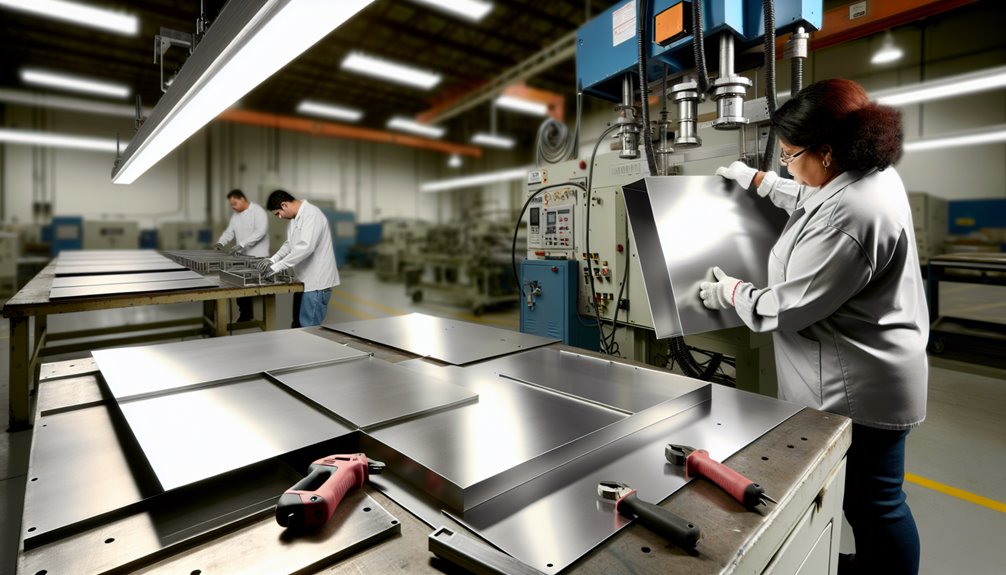
In the electrical enclosure fabrication process, defining specifications and requirements is the initial step, essential for ensuring the enclosure meets functional and environmental needs.
This is followed by meticulous design and engineering using advanced software to create precise models.
Material selection and sheet metal fabrication processes, including cutting and bending, lead to surface finishing and protection, ensuring durability and compliance with industry standards.
Determining the specifications and requirements for an electrical enclosure involves a meticulous analysis of several fundamental factors. This initial step in electrical enclosure fabrication is critical for guaranteeing functionality and protection.
Key considerations include:
These factors form the foundation for a successful fabrication process.
After defining the specifications and requirements, the process advances to the design and engineering phase of electrical enclosure fabrication.
This critical step in the electrical enclosure manufacturing process involves precise CAD design and layout planning. Engineers focus on ensuring that the sheet metal enclosure fabrication is refined for manufacturability.
Detailed cutouts, ventilation, and cable entry points are strategically incorporated, enhancing both functionality and efficiency. The enclosure fabrication process requires rigorous attention to detail to meet industry standards and client needs.
Material selection plays a pivotal role in the electrical enclosure fabrication process, influencing durability, safety, and cost-effectiveness. Choosing the appropriate material requires considering several critical factors:
These considerations guarantee the enclosure meets functional and environmental demands efficiently.
In the sheet metal fabrication process for electrical enclosures, precision cutting and laser processing techniques are employed to achieve the required dimensions and intricate designs.
Following this, bending and forming operations shape the metal to meet specific structural needs, while drilling, tapping, and machining guarantee precise component integration.
Welding and structural assembly finalize the enclosure, providing robustness and stability for demanding applications.
Cutting and laser processing play an essential role in the fabrication of electrical enclosures, enabling precise shaping and detailing of sheet metal components.
This stage involves:
Bending and forming are essential processes in the fabrication of electrical enclosures, transforming flat sheet metal into functional, three-dimensional structures.
Precision is achieved using techniques like channel, V-bending, and U-bending, each selected based on design requirements. Controlled force and angle guarantee accurate bends, maintaining material integrity.
This step is vital for securing dimensional accuracy and structural stability in the final enclosure product.
Drilling, tapping, and machining are pivotal processes in the fabrication of electrical enclosures, guaranteeing the precise creation of openings and threads necessary for component integration.
These processes demand accuracy and control, achieved through:
In the domain of electrical enclosure fabrication, welding and structural assembly are critical processes that guarantee robustness and integrity.
Precision welding techniques, including MIG and TIG, are employed to fuse components, ensuring seamless joints.
Structural assembly involves meticulous alignment and secure fastening of parts, achieving ideal stability. This step is essential for maintaining enclosure durability under various operational stresses, fulfilling stringent industry standards.
Surface finishing transforms the durability and appearance of electrical enclosures, providing vital protection against environmental challenges. Key techniques enhance both corrosion resistance and lifespan:
These surface finishing methods are essential for maintaining the integrity and functionality of enclosures, providing a controlled approach to enduring environmental exposure.
Assembly and component integration form a critical phase in the electrical enclosure fabrication process, where precision and attention to detail are paramount. This stage guarantees that all elements, from doors and hinges to internal structures, are meticulously aligned and securely fastened. Mounting plates are positioned to facilitate efficient component organization, while sealing systems, such as gaskets, are applied to protect against environmental intrusions. The integration process demands precision to uphold structural integrity and functional reliability.
| Component | Purpose |
|---|---|
| Doors and Hinges | Provide access and security |
| Mounting Plates | Organize internal components |
| Sealing Systems | Protect against environmental factors |
These integrations are crucial for guaranteeing the enclosures meet exacting standards required for performance in diverse applications.
Guaranteeing the highest standards, Step 7: Testing and Quality Inspection rigorously evaluates the electrical enclosure's performance and reliability.
This critical phase guarantees that each unit meets stringent criteria before reaching the end-user.
Key elements of the inspection process include:
This meticulous process ensures that every enclosure performs reliably under operational conditions.
Following the rigorous testing and quality inspection phase, the focus shifts to the essential task of packaging and delivery in the electrical enclosure fabrication process. This stage guarantees that enclosures reach their destinations intact and functional.
Protection during transport is paramount; therefore, enclosures are packed based on size and fragility. Smaller units may be contained in reinforced cardboard, while larger ones require secure wooden crates. Cushioning materials are strategically used to mitigate impact damage.
Clients may choose between pre-assembled and flat-pack options, each affecting logistics differently. Shipping methods are selected to align with size and destination requirements, guaranteeing compliance with all relevant regulations.
Meticulous tracking and logistics management facilitate timely delivery, maintaining the integrity and reliability of the enclosures.
Although often overlooked, the quality of fabrication in electrical enclosures critically influences their performance. High fabrication standards guarantee:
Each factor is integral to the enclosure's efficiency, safeguarding electrical systems from environmental and operational challenges.
Understanding these impacts enables informed decisions, aligning fabrication quality with performance demands.
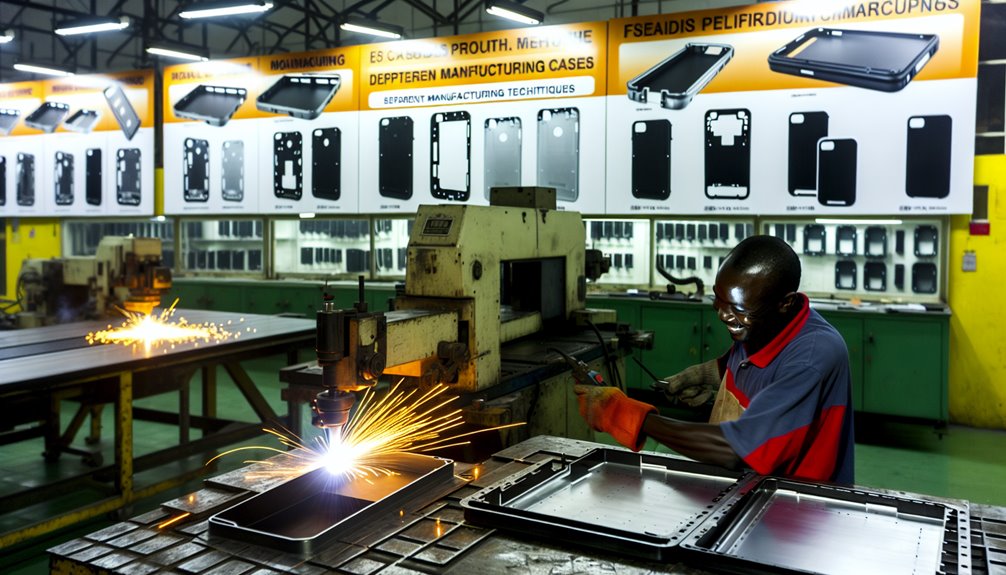
In evaluating fabrication methods for electrical enclosures, comparing welded enclosures with modular designs reveals distinct advantages and limitations.
Welded enclosures offer robust structural integrity, suitable for high-stress environments, while modular designs provide flexibility and ease of assembly.
Additionally, CNC fabrication provides precision and efficiency over manual methods, reducing human error and ensuring consistent quality.
When comparing welded enclosures to modular designs, one must consider the distinct advantages and limitations each fabrication method presents.
Welded enclosures offer robust structural integrity, suitable for environments requiring high durability. Modular designs, however, provide flexibility and scalability, ideal for evolving needs.
Key considerations include:
CNC fabrication, leveraging computer numerical control technology, offers precision and repeatability that manual fabrication struggles to match. The CNC process utilizes programmed commands to control machinery, ensuring exactness in cuts and bends. This automation reduces human error and allows for complex design implementation with consistent quality.
In contrast, manual fabrication relies on skilled labor, which, while versatile, can introduce variability and increased lead times. CNC's efficiency in high-volume production is unparalleled, enabling rapid scalability without compromising accuracy.
Manual methods, however, provide custom flexibility, small-batch projects where human expertise is essential. Ultimately, the choice between CNC and manual fabrication hinges on project requirements, prioritizing precision and efficiency versus adaptability and craftsmanship.
Selecting the appropriate fabrication approach for electrical enclosures requires an assessment based on the application environment, production volume, and customization needs.
Enclosures designed for harsh conditions may necessitate robust materials and advanced manufacturing techniques, while high-volume production might benefit from standardized processes for cost efficiency.
Balancing cost with performance demands careful consideration of material selection and design complexity to guarantee both functionality and economic viability.
Considering the application environment is essential in choosing the appropriate fabrication approach for electrical enclosures. This decision impacts protection, durability, and compliance with industry standards.
Key factors include:
When determining the appropriate fabrication approach for electrical enclosures, both production volume and customization requirements play critical roles. High-volume production often benefits from automated processes, such as CNC machining, which guarantee consistency and efficiency.
For projects demanding bespoke designs, manual fabrication techniques may be more suitable, allowing for tailored solutions that meet specific client needs. Customization might include unique dimensions, specialized cutouts, or particular material choices, necessitating a flexible fabrication method.
Evaluating the balance between volume and customization is essential to enhance manufacturing processes. Employing the right approach guarantees that the enclosures not only meet precise specifications but also adhere to industry standards.
This strategic alignment between production methods and design requirements is crucial for achieving peak performance and reliability.
Efficiency governs the decision-making process in choosing the right fabrication approach for electrical enclosures, balancing cost with performance requirements. A precise evaluation involves examining multiple factors:
These considerations enable informed decisions, aligning enclosure fabrication with both budgetary constraints and performance expectations.
Fabricated electrical enclosures play an essential role in various applications, ensuring the protection and functionality of sensitive equipment.
In industrial automation, they safeguard control systems from environmental hazards, maintaining uninterrupted operations.
In industrial automation, enclosures protect control systems from environmental hazards, ensuring seamless and continuous operations.
For outdoor electrical systems, these enclosures provide robust protection against weather elements, ensuring reliability and safety.
Within renewable energy systems, such as solar and wind, enclosures protect critical components from dust and moisture, enhancing system longevity and efficiency.
Data centers and control systems benefit from customized enclosures that offer thermal management and secure housing, maximizing performance and minimizing downtime.
Each application demands specific material choices and design configurations to meet stringent industry standards, ensuring that the enclosures deliver peak protection and operational efficiency across diverse environments.

Material choices directly impact enclosure cost through variations in price, durability, and environmental resistance. For instance, stainless steel incurs higher costs due to its corrosion resistance, while aluminum offers a cost-effective, lightweight alternative suitable for indoor applications.
Custom enclosure designs deliver distinct advantages: precise protection, personalized aesthetics, and perfect fit. They accommodate unique dimensions, specific materials, and specialized features, ensuring efficiency and enhancing both functionality and brand identity, ultimately offering superior control over environmental challenges.
Custom enclosures enhance energy efficiency by optimizing thermal management, reducing heat loss, and improving insulation. Tailored designs incorporate specific materials and features, ensuring minimal energy waste and aligning with environmental control requirements, thereby maximizing system performance and reliability.
Enclosure durability is tested through rigorous protocols, including impact resistance assessments, corrosion exposure, and thermal cycling. These tests guarantee structural integrity and longevity under various environmental conditions, meeting industry standards and client specifications for reliable performance.
Aesthetics in enclosure design enhance brand identity and professional appearance. They influence client perception, contributing to product differentiation. A visually appealing design can align with marketing strategies, ensuring the enclosure integrates seamlessly into its intended environment.
In electrical enclosure fabrication, precision in design, material selection, and manufacturing processes directly determines the performance, durability, and safety of the final product. From CNC machining and laser cutting to surface finishing and quality inspection, every step plays a critical role in ensuring enclosures can withstand demanding industrial and environmental conditions.
For projects that require custom-built solutions, working with an experienced manufacturer is essential. Conya Electric offers engineered electrical enclosures designed for specific environmental, load, and compliance requirements.
👉 Explore our custom enclosure solutions or request a quote to match your project specifications.
