Language

Box-type substations are compact, prefabricated units essential for solar farms, transforming DC from solar panels into grid-compatible AC. Designed for efficiency, they integrate components like transformers and switchgear to optimize energy flow and reduce installation costs. Their modular design allows easy scalability and environmental benefits. These substations support hybrid systems and large-scale solar projects, ensuring reliable operation. For those exploring deeper insights, the nuances of their design and application hold significant value.
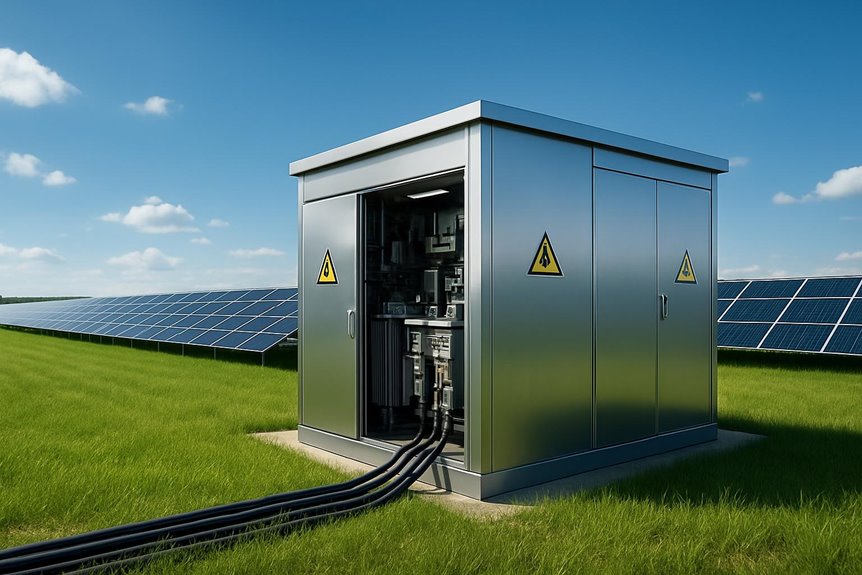
A box type substation is a compact, prefabricated electrical installation designed to integrate seamlessly into solar farms. Its primary function is to transform and manage the flow of electricity, converting the direct current (DC) generated by solar panels into alternating current (AC) suitable for grid distribution.
Key components housed within include medium voltage switchgear, transformers, low voltage distribution panels, and auxiliary systems, all engineered for efficient assembly and operation.
Box-type substations serve as compact, prefabricated units designed for efficient energy management in solar farms and other applications.
These systems, often referred to as photovoltaic box substations, play an essential role in the solar power distribution system. They integrate components such as the solar inverter transformer station to convert and manage electricity generated from solar panels.
As renewable energy substations, they guarantee the seamless conversion of DC to AC power, optimizing energy flow into the grid.
The design facilitates rapid deployment and reduced installation timelines, enhancing operational efficiency.
In the domain of energy infrastructure, the core components of a box-type substation are pivotal for its functionality and efficiency. A solar farm substation typically contains a medium voltage switchgear, transformer, and a low-voltage distribution system, each contributing to the substation’s compact design. The medium voltage switchgear manages electrical flow and guarantees safety, while the transformer adjusts voltage levels for efficient energy transmission. The low-voltage distribution system allows for effective power delivery to the grid.
| Component | Function | Importance |
|---|---|---|
| Medium Voltage Switchgear | Manages electrical flow | Guarantees operational safety and reliability |
| Transformer | Adjusts voltage levels | Facilitates efficient energy transmission |
| Low-Voltage Distribution System | Distributes power to grid | Enables effective energy delivery |
These elements are essential for optimizing performance and minimizing losses in solar applications.
In a solar farm, a box type substation facilitates the transformation of direct current from photovoltaic modules into alternating current through integration with solar inverters.
This system then steps up the voltage via transformers to meet grid requirements, ensuring efficient power transmission.
Additionally, it incorporates protective mechanisms to stabilize the grid connection and safeguard against faults and overloads.
Harnessing solar energy efficiently requires a seamless shift of power from photovoltaic (PV) modules to the grid, and this is where a box-type substation plays an essential role.
In utility-scale solar projects, the prefabricated substation guarantees that energy captured by PV modules is systematically routed to the solar grid connection. It manages power transformation from direct current (DC) to alternating current (AC) using integrated transformers, facilitating the upward voltage adjustment necessary for grid distribution.
The compact, factory-assembled design allows for rapid deployment and reduced installation timelines, optimizing cost efficiency. By providing a centralized hub for power flow management, the box-type substation enhances reliability and minimizes energy loss, guaranteeing a stable connection to the grid.
A critical component of solar farm operations, the integration of solar inverters with a box-type substation guarantees efficient energy conversion and distribution. This integration enables seamless conversion of direct current (DC) from photovoltaic panels to alternating current (AC) suitable for grid use.
The design guarantees ideal compatibility and functionality between the inverters and the substation's components. Key advantages include:
This strategic integration is essential for maximizing the performance and reliability of solar energy systems.
The voltage step-up process in a box-type substation for solar farms is vital for efficient energy transmission. This process involves transforming the lower voltage output from solar inverters into higher voltage suitable for power grid integration.
By utilizing a step-up transformer, the substation increases voltage levels to reduce line losses during long-distance transmission. Precision in design guarantees minimal energy dissipation and peak transformer efficiency.
The transformer’s core and winding configurations are meticulously engineered to handle the specific voltage and current demands of the solar farm. Advanced cooling systems maintain operational stability, preventing overheating.
This meticulous voltage step-up process is essential to maximizing the transfer of clean energy from generation points to the broader electrical network.
Connecting solar farms to the power grid efficiently involves precise engineering within a box-type substation. These substations perform critical grid connection and protection functions, ensuring stability and safety. Key components handle energy transfer and safeguard against faults.
These elements work together to maintain operational reliability and grid stability.
The compact design of box-type substations supports efficient energy management, reducing installation and maintenance complexities, while enhancing control over solar farm operations.
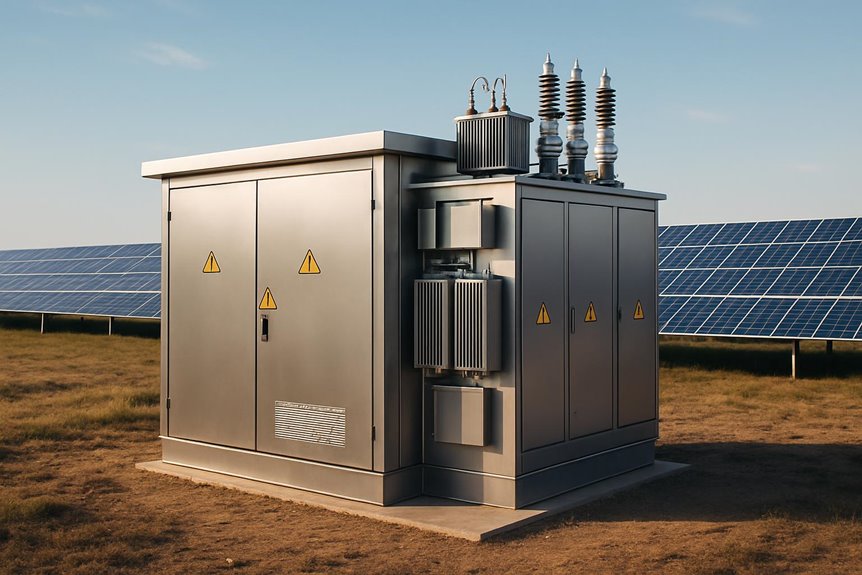
Box-type substations offer significant advantages for solar projects, primarily through their compact footprint and reduced civil construction costs, resulting in efficient land use and budget savings.
Their factory-assembled reliability guarantees consistent quality and performance, minimizing on-site variability and installation errors.
Additionally, these substations facilitate quicker installations and simplified future expansions, providing flexibility to accommodate increasing energy demands.
Given the increasing demand for efficient solar energy solutions, the compact footprint of box-type substations presents a significant advantage for solar projects.
These substations optimize land use, allowing more space for solar panels and other essential infrastructure. Their design reduces the environmental impact and maximizes energy production per square meter.
Key benefits include:
This compact design is vital for solar projects aiming to maximize output while maintaining ecological balance and cost-effectiveness.
A significant advantage of box-type substations in solar projects is their expedited installation timeline. These prefabricated units are engineered for swift deployment, reducing the time from delivery to operational status to a mere 1-3 days post site preparation.
This rapid installation is facilitated by factory assembly and testing, which allows for parallel site and substation readiness processes. Unlike traditional substations, which face delays from on-site construction and testing complexities, box-type solutions guarantee predictability and efficiency.
The reduced timeline minimizes project downtime, enabling faster energy generation and revenue realization. This efficiency is critical in large-scale solar farms where multiple units are required, optimizing project management and resource allocation while maintaining high standards of operational readiness.
Despite the inherent complexity of power infrastructure, prefabricated substations greatly lower civil construction costs for solar projects. By minimizing on-site construction requirements, these substations streamline project implementation, offering a significant reduction in expenses.
This efficiency in civil construction not only controls costs but also accelerates deployment timelines.
Making prefabricated substations an attractive option for solar farm developers seeking cost-effective and rapid solutions.
Factory-assembled reliability stands as a cornerstone advantage of box-type substations for solar projects, guaranteeing consistent performance and operational efficiency. By being produced in controlled environments, these units benefit from rigorous quality checks and standardized assembly processes. This results in reduced on-site errors and enhanced equipment lifespan, optimizing long-term operational costs.
The factory environment allows:
| Benefit | Description |
|---|---|
| Quality Assurance | Controlled assembly guarantees uniform standards and reduces defects. |
| Predictable Performance | Standardized components lead to reliable and consistent operation. |
| Reduced Installation Time | Pre-assembled units minimize on-site labor, facilitating quicker deployment. |
These advantages underscore the reliability and efficiency inherent in factory-assembled box-type substations, making them a preferred choice for solar energy projects.
Leveraging the strengths of factory-assembled reliability, box-type substations offer notable advantages for solar projects through their capacity for easier expansion.
Their modular design allows these substations to accommodate increasing energy demands efficiently. This adaptability is essential for solar farms aiming to scale without extensive reconfiguration.
Key benefits include:
The design inherently supports future scalability, ensuring that solar plants can adapt to market demands without unnecessary cost burdens.
This flexibility enhances the long-term viability and competitiveness of solar energy projects.
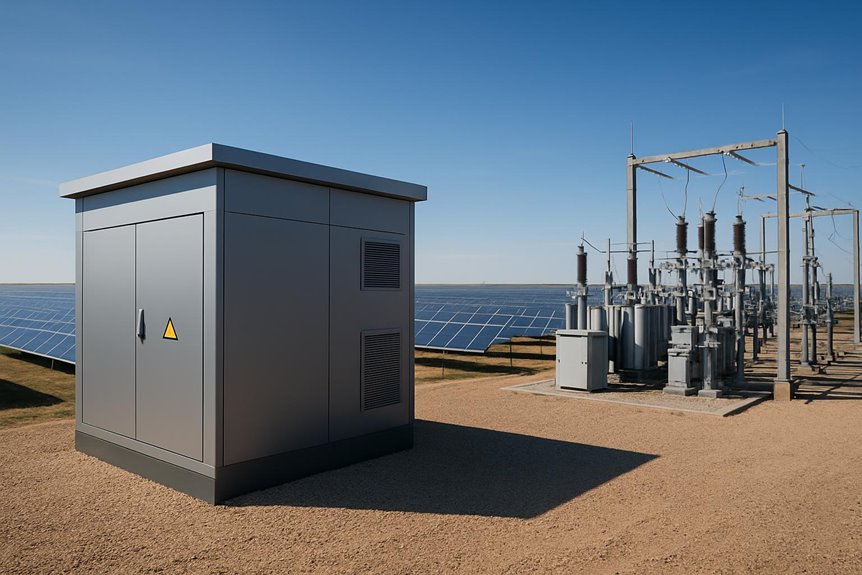
When comparing Box Type Substations to Traditional Solar Substations, it is essential to evaluate several critical factors that influence their application in solar farms.
Box Type Substations offer a compact footprint and reduced installation time, typically requiring only 1-3 days post site preparation. This efficiency is achieved through factory integration and parallel processing.
Conversely, Traditional Substations often face extended timelines of 3-6 months due to complex site work and coordination challenges.
The initial investment for Box Type Substations is generally lower, given their consolidated cost structure and reduced civil engineering expenses.
Additionally, they provide superior scalability and maintenance ease, with modular designs enabling straightforward future expansions.
Traditional Substations, however, incur higher ancillary costs and pose challenges in adapting to rapid deployment needs.
In solar farms, box-type substations are mainly categorized into European-Type, American-Type, and Prefabricated Compact Substations.
European-Type substations feature compartmentalized designs for enhanced ventilation and customization, while American-Type substations are compact and fully sealed, suited for space-constrained areas.
Prefabricated Compact Substations offer rapid deployment and integration, optimizing installation timelines and cost efficiency.
European-Type Box Substations, known as YB series, play a pivotal role in solar farms by offering a modular and efficient solution for energy distribution.
These substations are designed with independent compartments, enabling enhanced ventilation and customization. They integrate seamlessly with solar farm infrastructures, ensuring reliable performance and minimal energy loss.
The YB series' adaptability and efficiency make them a preferred choice in environments where reliability and control are paramount.
American-Type Box Substations, known as the ZGS series, are integral to solar farms, providing a compact and efficient solution for energy management.
These units are characterized by their fully enclosed, modular design, offering ease of installation and minimal land use. The ZGS series includes essential components such as medium voltage switchgear, transformers, and low voltage distribution systems, all factory-assembled to guarantee quality and reliability.
Their design prioritizes space efficiency and operational simplicity, making them suitable for areas with spatial constraints. Additionally, American-Type substations feature robust safety measures, including dead front designs and IP-rated enclosures, guaranteeing protection against environmental hazards.
This configuration supports streamlined integration into solar farm operations, optimizing energy flow and reducing potential disruptions.
Prefabricated compact substations are pivotal in modern solar farm infrastructure, offering efficient and streamlined solutions for energy distribution. These substations integrate critical components within a single, factory-assembled unit, enhancing reliability and reducing on-site labor. Such units are designed to minimize spatial requirements while ensuring peak functionality.
These features make prefabricated compact substations an essential choice for solar farms, providing a cost-effective and scalable approach to modern energy needs.
Designing box-type substations for solar farms requires careful consideration of solar farm capacity and corresponding MV voltage requirements to guarantee efficient power distribution.
Environmental conditions dictate the necessity for robust cooling and ventilation systems to maintain ideal operating temperatures.
Additionally, integrated protection and monitoring systems are essential for safeguarding against faults and facilitating real-time performance assessments.
Solar farm capacity is a vital factor in the design of box-type substations, directly influencing their efficiency and scalability. The capacity dictates the substation's configuration, equipment selection, and overall layout. Accurate capacity assessment guarantees that the substation can handle the generated power without overloading, maximizing performance and reliability.
Key considerations include:
Attention to these factors is essential for maintaining operational efficiency and meeting energy demands.
The medium voltage (MV) requirements for box-type substations in solar farms are critical for guaranteeing efficient power distribution and grid integration. Properly designed MV configurations help maintain system stability and mitigate transmission losses.
Typically, these substations operate within a range of 11-33kV, which aligns with regional grid standards and optimizes the transfer of generated power. Key components include MV switchgear and transformers that are engineered to handle fluctuating loads and guarantee reliable protection.
The selection of equipment must consider factors such as thermal performance, fault tolerance, and compatibility with existing infrastructure. Precise calibration and testing are essential to meet regulatory compliance and performance benchmarks, guaranteeing seamless integration into the broader energy network.
While addressing the environmental conditions for solar farm box substations, it is essential to take into account factors such as temperature fluctuations, humidity levels, and potential exposure to harsh weather. These conditions impact substation performance and longevity, necessitating robust design considerations.
High temperatures can accelerate equipment degradation, while humidity may lead to corrosion and insulation failure. Harsh weather, including wind and rain, demands resilient enclosures to safeguard critical components.
Effective adaptation to these conditions enhances substation reliability and efficiency.
Effective cooling and ventilation are critical to maintaining ideal performance in solar farm box substations. These systems manage thermal loads generated by transformers, inverters, and switchgear.
Heat dissipation is facilitated through strategically placed vents and fans, guaranteeing maximum air circulation. Temperature sensors and control systems adjust airflow dynamically, maintaining equipment within specified thermal limits.
Natural ventilation, supplemented by forced cooling methods, prevents overheating and minimizes energy loss. The design incorporates high-efficiency heat exchangers to enhance cooling capacity without excessive energy consumption.
Proper ventilation also reduces moisture accumulation, mitigating corrosion risks. Adequate cooling infrastructure guarantees reliability, prolongs equipment lifespan, and supports continuous operation under varying environmental conditions, aligning with the operational efficiency goals of solar farms.
Incorporating advanced protection and monitoring systems in solar farm box substations enhances operational reliability and safety. These systems are vital in detecting and mitigating faults, guaranteeing continuous energy flow and preventing equipment damage.
Key design considerations include:
These features guarantee that solar farms operate efficiently and safely, aligning with the stringent demands of modern energy infrastructure.
The integration of these systems is essential for maintaining high performance and reducing operational costs.
Designing solar farm box substations to meet utility grid requirements involves meticulous planning and adherence to technical standards. Key considerations include voltage regulation, harmonics management, and synchronization with grid frequency.
The substation must integrate seamlessly, ensuring stability and reliability. Engineers must select components that align with grid codes, such as transformers with appropriate impedance and inverters capable of managing reactive power.
Protection systems must be robust, incorporating advanced relays and breakers to handle faults efficiently. Compliance with safety standards, including insulation and grounding protocols, is essential to prevent electrical hazards.
Additionally, scalability should be considered to accommodate future expansion, ensuring the substation remains adaptable to evolving grid demands and technological advancements.
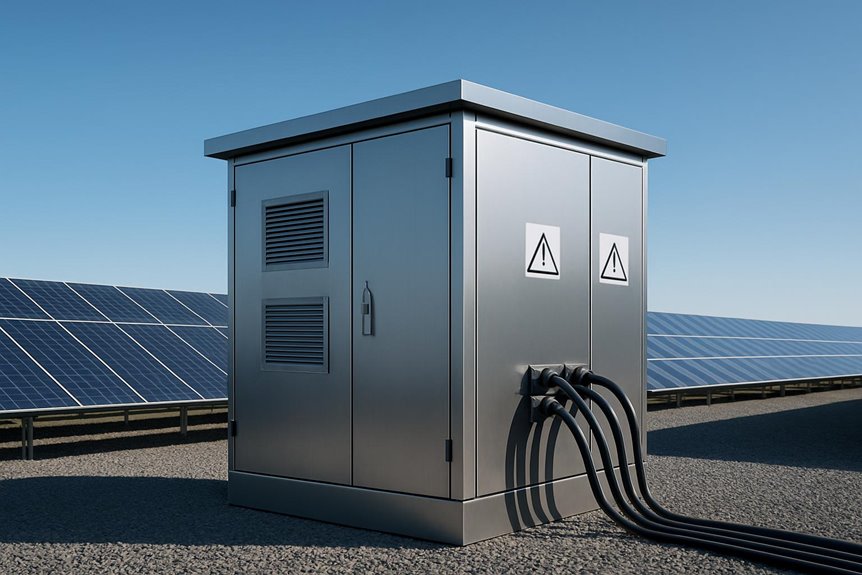
Box-type substations serve critical roles in renewable energy applications such as utility-scale solar farms, floating solar plants, and solar plus energy storage projects. They provide efficient energy conversion, compact design, and rapid deployment necessary for optimizing these installations.
Additionally, hybrid solar and wind farms benefit from their modularity and ease of integration, enhancing overall system performance and reliability.
Utility-scale solar farms, representing a significant portion of renewable energy projects, are engineered to produce large quantities of electricity, often exceeding hundreds of megawatts. These installations utilize vast arrays of photovoltaic panels strategically placed to maximize sunlight capture.
The implementation of box-type substations in such settings offers several advantages:
These factors make box-type substations integral to the scalability and efficiency of utility-scale solar farms, ensuring a reliable and sustainable energy supply.
While maximizing the use of water surfaces, floating solar plants offer an innovative solution to the challenges of land scarcity in renewable energy projects. These systems are strategically positioned on reservoirs, dams, or lakes, utilizing previously untapped areas.
The integration of box-type substations in floating solar applications provides streamlined power conversion and efficient energy management. Key components, including inverters and transformers, are adapted for buoyant environments, ensuring reliability and operational efficiency.
The deployment of these substations minimizes land usage and reduces costs associated with land acquisition. Additionally, the cooling effect of water enhances photovoltaic efficiency, thereby optimizing energy output.
This approach exemplifies a strategic method of expanding solar capacity while addressing geographical constraints and promoting sustainable energy solutions.
Solar plus energy storage projects represent a vital advancement in renewable energy applications, enhancing the reliability and consistency of power supply. The integration of energy storage with solar farms enables effective management of power fluctuations and guarantees a stable energy output.
Box-type substations play a significant role in these projects by facilitating seamless energy conversion and distribution.
Key benefits include:
These projects are essential for meeting stringent energy demands and maximizing solar energy utilization.
Hybrid solar and wind farms represent a versatile approach in renewable energy projects, combining the strengths of both solar and wind power to enhance energy production.
This hybrid model leverages solar’s peak generation during daylight and wind’s typically higher output at night, offering a more consistent and reliable energy supply.
The integration of a box-type substation is essential, as it centralizes the transformation and distribution processes, optimizing land use and minimizing energy losses.
These substations facilitate seamless switching between energy sources and guarantee efficient grid connectivity.
Additionally, the prefabricated nature of box-type substations enables rapid deployment, vital for projects requiring swift operationalization.
This approach not only maximizes energy yield but also supports grid stability and resilience.
Selecting the appropriate box-type substation for a solar farm involves careful consideration of capacity matching to guarantee ideal performance and efficiency.
Transformer selection and switchgear configuration must align with the specific electrical demands and environmental conditions of the site.
Confirming compliance with relevant certifications and planning for future expansion are essential steps in maintaining reliability and accommodating growth.
Determining the appropriate capacity for a box-type substation in a solar farm involves a meticulous evaluation of the farm's energy demands and future scalability. Accurate capacity matching guarantees ideal performance and cost-effectiveness.
Key considerations include:
An analytical approach to these factors allows for precise capacity planning, ensuring the substation meets current needs while accommodating future growth.
Proper capacity matching mitigates risks of underperformance and maximizes return on investment.
In optimizing transformer selection for a box-type substation within a solar farm, a precise evaluation of both technical specifications and operational demands is essential. The transformer must efficiently manage the energy conversion from DC to AC while minimizing losses. Critical factors include power rating, efficiency, cooling methods, and compatibility with grid standards. Selecting the appropriate transformer guarantees reliability and performance, reducing operational costs and maximizing energy output.
| Criteria | Importance |
|---|---|
| Power Rating | Guarantees capacity |
| Efficiency | Reduces losses |
| Cooling Method | Enhances lifespan |
| Grid Compatibility | Guarantees compliance |
Through careful analysis, a tailored solution can address specific site conditions and energy requirements, fostering a sustainable and efficient solar farm operation.
Switchgear configuration plays a pivotal role in the operational efficiency and safety of a box-type substation within a solar farm. It is crucial to assess the specific electrical requirements and environmental conditions of the site to determine the best configuration.
Key factors include:
A thorough analysis of these elements will facilitate the selection of a switchgear configuration that enhances performance and reliability, aligning with the strategic goals of the solar farm operation.
Evaluating switchgear configuration provides a foundation for understanding the technical requirements of a solar farm, leading seamlessly into the domain of compliance and certifications.
Confirming compliance with international standards such as IEC 62271 and IEEE C37.20.2 is paramount for selecting a suitable box-type substation. These standards guarantee safety, reliability, and performance. Certifications like CE and UL mark adherence to stringent quality protocols, mitigating risk and confirming compatibility with grid infrastructure.
Additionally, local regulations may impose specific requirements affecting design and installation. A thorough review of these certifications confirms that the substation meets both global and regional safety and operational standards.
This meticulous approach minimizes operational risks and facilitates seamless integration into the solar farm's overall system.
Selecting the appropriate box-type substation for a solar farm involves a strategic analysis of future expansion needs. Key considerations include scalability, adaptability, and technological integration. A precise evaluation guarantees the substation can accommodate increased capacity and evolving technology without significant redesign.
These factors guide decision-makers in selecting a substation that aligns with long-term growth objectives, minimizing future retrofitting costs and guaranteeing continuous operational efficiency.
Proper planning facilitates smoother changes and sustained energy production capabilities.
Conya Box Type Substations attract solar developers due to their robust certification and proven reliability.
With over 30 years in the electrical equipment sector, Conya holds ISO and CCC certifications, ensuring adherence to stringent quality standards. Strategic alliances with industry leaders such as ABB, Eaton, and AEG further enhance product credibility.
Their focus on tailored, one-stop solutions, covering production, installation, and maintenance, offers extensive support to solar farm operators.
Conya’s expertise in photovoltaic energy and new energy sectors underscores their commitment to innovation. Their substations are engineered to meet the specific needs of diverse projects, providing stability and efficiency.
This targeted approach, combined with a history of excellence, makes Conya a preferred choice for solar developers.
Maintenance requirements for box-type substations in solar farms include regular inspections of electrical components, ensuring proper ventilation, and monitoring transformer oil levels. Skilled technicians should perform predictive maintenance, leveraging smart diagnostics to identify potential failures and optimize performance.
How do box-type substations withstand extreme weather? Their robust IP-rated enclosures provide protection against dust, rain, and temperature fluctuations. Are they the ultimate solution for resilience? Their design guarantees minimal maintenance while maintaining operational integrity.
Box-type substations in solar applications require certifications like CE for safety and reliability. Compliance guarantees adherence to electrical standards and environmental regulations, facilitating integration into existing infrastructure while maintaining operational integrity and minimizing energy losses.
Box-type substations can seamlessly synchronize with solar farm infrastructure. Their compact, customizable composition allows for efficient integration, enhancing energy output, optimizing operational efficiency, and ensuring environmental adaptability, thereby meeting stringent standards and satisfying stakeholders' stringent requirements.
The typical lifespan of box-type substations is 20 to 30 years, with warranty terms generally ranging from 2 to 5 years. These units require regular maintenance to guarantee peak performance and extend operational longevity.
To summarize, box-type substations revolutionize solar farms, acting as the beating heart of renewable energy projects with their compact, efficient design. Their rapid deployment and integration of smart technologies offer unparalleled reliability and performance optimization. Compared to traditional substations, they provide a quantum leap in operational efficiency and cost-effectiveness. As solar energy surges ahead, the adaptability of box-type substations guarantees they remain the linchpin of sustainable power generation, transforming the energy landscape with unprecedented precision.
