Language

When selecting between fixed and withdrawable switchgear, professionals must evaluate their specific application needs, balancing factors such as operational efficiency, cost, and maintenance requirements. Fixed switchgear offers a compact, cost-effective solution for stable, low-demand environments, while withdrawable switchgear provides flexibility and safety for high-demand applications. Understanding the design, operation, and lifecycle differences between these options is essential for making an informed decision that guarantees peak performance and reliability in varying operational contexts.
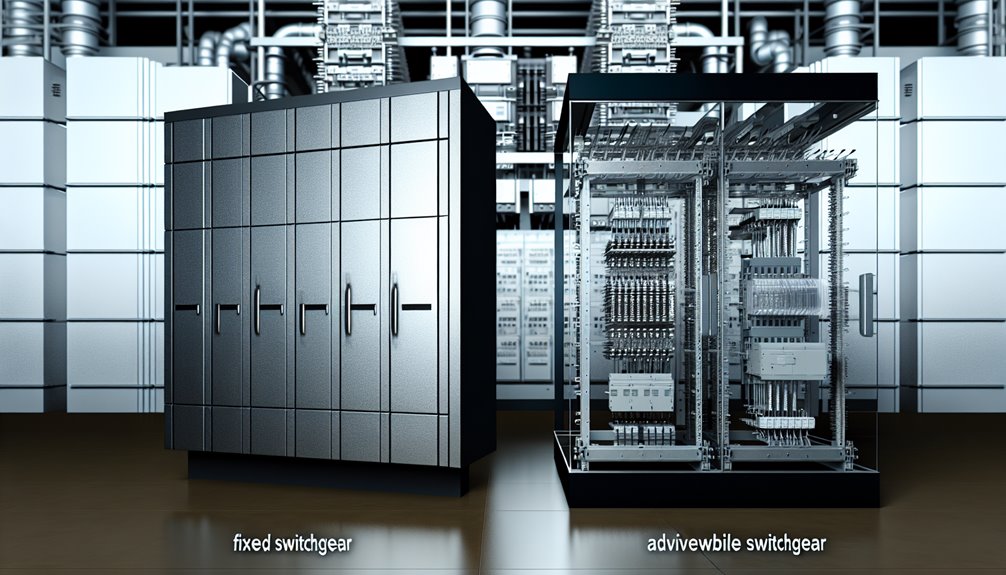
Switchgear systems are essential in electrical distribution, serving as a crucial component for controlling, protecting, and isolating electrical equipment.
Fixed switchgear and withdrawable switchgear represent two primary designs used in low-voltage applications. Fixed switchgear is characterized by its fixed installation, where components such as measuring instruments are permanently mounted, offering a streamlined yet less flexible layout. This design requires an isolation switch on the power supply side, limiting the number of output circuits and maximum rated current.
Fixed switchgear offers a streamlined layout but limits flexibility with permanently mounted components and fewer output circuits.
In contrast, withdrawable switchgear features modular drawers, facilitating independent maintenance and higher current capabilities. This design enhances operational flexibility and safety with visible breakpoints but incurs higher costs due to its complexity.
Each design caters to specific operational needs.
Fixed low-voltage switchgear uses permanently mounted circuit breakers integrated into a rigid, space-efficient panel structure. Once installed, the breaker remains fixed in position and is not intended to be withdrawn during normal operation or maintenance.
This design approach prioritises structural simplicity, mechanical stability, and cost efficiency. Because the switching devices are hard-mounted, fixed switchgear is commonly specified for applications where system configuration is stable and frequent modification is unlikely.
Maintenance access is achieved by isolating the incoming power supply using an upstream disconnector or isolation switch. While this method provides safe working conditions, it typically requires a full system shutdown, which can increase downtime during servicing.
From a performance standpoint, fixed switchgear usually supports lower maximum current ratings and fewer outgoing feeders compared to withdrawable designs. As a result, it is well-suited to compact substations, secondary distribution points, and budget-sensitive installations where simplicity and reliability outweigh operational flexibility.
| Feature | Fixed Switchgear | Practical Impact |
|---|---|---|
| Circuit breaker mounting | Permanently fixed in panel | No draw-out or racking mechanism |
| Maintenance approach | Isolation via upstream switch | System shutdown required |
| Configuration flexibility | Limited | Best for stable, non-expanding systems |
| Current rating capacity | Typically lower | Suitable for secondary distribution |
| Cost profile | Lower initial cost | Reduced mechanical complexity |
| Typical applications | Compact substations, LV panels | Budget-focused projects |
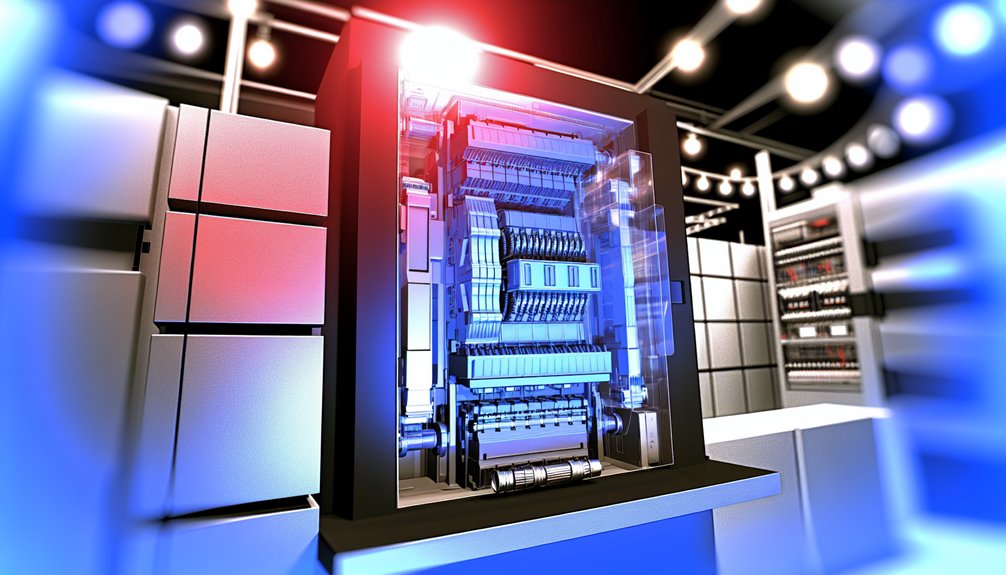
While fixed switchgear serves well in stable environments with budget constraints, withdrawable switchgear offers distinct advantages in operational flexibility and maintenance efficiency.
The medium voltage switchgear design incorporates draw-out circuit breakers, allowing swift removal and insertion without system shutdown. This design facilitates service, test, and isolated positions, enhancing maintenance procedures and reducing mean time to repair (MTTR).
Employing mechanical interlocks and shutters, withdrawable systems guarantee technician safety by providing visible isolation points. These features contribute to operational flexibility, enabling quick adaptation to system changes and minimizing downtime.
Consequently, withdrawable switchgear is particularly suited for environments requiring high reliability and continuous operation, where maintenance windows are limited and operational efficiency is paramount.
When comparing fixed and withdrawable switchgear, critical points of differentiation include safety protocols, ease of maintenance, and operational efficiency.
Withdrawable systems offer superior maintenance access and reduced downtime due to their modular design, while fixed systems require full shutdowns for servicing.
Additionally, withdrawable switchgear provides enhanced visual isolation and operational confidence, necessitating higher operator skill and site-specific practices, whereas fixed switchgear is more compact and environmentally favorable in constrained spaces.
Although both fixed and withdrawable switchgear systems aim to guarantee operational safety, their approaches diverge markedly regarding risk reduction methodologies.
Fixed switchgear often incorporates internal arc safety switchgear, employing isolation switches to mitigate risks of false closing and electric shock.
Conversely, withdrawable switchgear allows for visible breakpoints, enhancing inspection safety.
The risk reduction and safety measures embedded within each system reflect different operational philosophies.
These features are essential for users prioritizing control and safety.
In examining the maintenance access and downtime associated with fixed and withdrawable switchgear, it becomes apparent that each system presents distinct operational dynamics.
Fixed switchgear often necessitates complete de-energization for maintenance, leading to potential operational downtime and increased switchgear lifecycle cost.
Conversely, withdrawable switchgear allows for the independent removal and servicing of individual components, minimizing downtime and enhancing maintenance efficiency. This capability is particularly advantageous in high-demand environments where continuous operation is critical.
However, the initial capital expenditure for withdrawable systems is higher, reflecting their complex design and modular components.
Decision-makers must weigh these factors carefully, aligning the switchgear choice with their operational priorities and long-term financial strategy to guarantee peak performance and cost-effectiveness.
Visual isolation serves as a critical factor in evaluating the operational confidence provided by fixed and withdrawable switchgear.
In an mv switchgear comparison, withdrawable designs typically offer enhanced visual isolation, aligning with standards such as IEC 62271 switchgear. This visual clarity guarantees operators can confirm the disconnection of circuits, reducing the risk of operational errors.
In contrast, fixed switchgear may require additional steps to guarantee isolation, potentially affecting confidence.
This aspect considerably influences decision-making in switchgear selection.
Operator skill and site practices play a pivotal role in determining the suitability of fixed versus withdrawable switchgear for specific applications.
The complexity of withdrawable systems demands proficient operators who can safely manage the interchange of modules to guarantee seamless operations. In environments where operator expertise is variable, fixed switchgear offers a simpler, more straightforward option with fewer operational steps required.
Site practices, such as routine maintenance schedules and safety protocols, influence the choice as well. Withdrawable systems facilitate maintenance without complete shutdowns, aligning with practices in facilities requiring constant uptime. Conversely, fixed systems necessitate de-energization for interventions, which may align with sites adhering to strict safety and maintenance protocols.
Ultimately, site-specific operational capabilities inform the best switchgear configuration.
When evaluating switchgear options, it is essential to contemplate how environmental and space factors impact the selection between fixed and withdrawable systems.
Fixed switchgear tends to have a compact design, making it suitable for installations with limited space. Conversely, withdrawable switchgear, while offering operational flexibility, requires more room due to its modular components.
Environmental considerations also play a role in decision-making, as both systems must withstand specific conditions without compromising performance.
When evaluating switchgear designs, maintenance frequency and lifecycle performance are often more decisive than initial cost. A key differentiator is how often circuit breakers must be accessed for inspection, testing, or replacement—and how disruptive that process is to system operation.
Withdrawable switchgear offers a clear advantage in environments where uptime and serviceability are critical. Its modular, draw-out design allows breakers to be isolated, withdrawn, and replaced without disturbing adjacent circuits. This significantly reduces mean time to repair (MTTR) and enables faster fault recovery, routine inspections, and component upgrades.
By contrast, fixed switchgear requires a complete system shutdown to access internal components. While this approach is mechanically simpler, it increases maintenance windows and can negatively affect operational continuity, particularly in facilities with limited outage tolerance.
Over the long term, these differences directly influence system availability, maintenance planning, and total cost of ownership.
| Aspect | Fixed Switchgear | Withdrawable Switchgear |
|---|---|---|
| Breaker access | Requires full shutdown | Draw-out without system-wide outage |
| Inspection effort | Higher, more intrusive | Lower, modular access |
| Mean time to repair (MTTR) | Longer | Shorter |
| Operational continuity | Limited during maintenance | Maintained for adjacent circuits |
| Long-term reliability | Moderate | High |
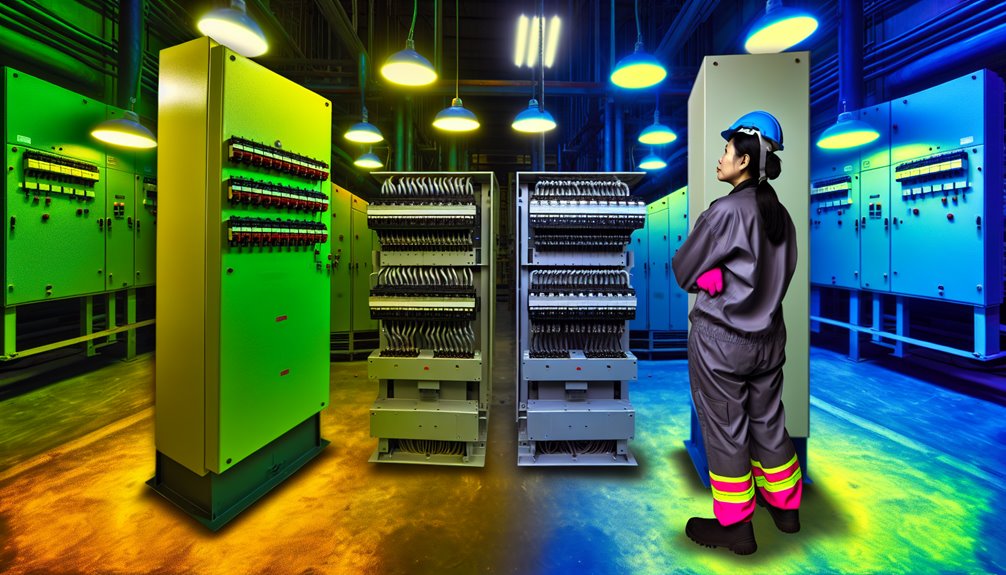
While initial purchase price is a significant factor in switchgear selection, a thorough cost analysis must consider additional financial aspects such as CapEx versus OpEx, downtime costs, and total cost of ownership (TCO).
A detailed evaluation requires analyzing the long-term operational expenses against the initial capital investment, especially for facilities with high uptime demands. The impact of downtime, both planned and unplanned, on productivity and financial performance must be assessed.
Spare parts availability and reliable service planning can influence ongoing maintenance costs and operational efficiency.
Fixed switchgear emerges as a viable option for projects characterized by simpler installations and budgetary constraints. This design is advantageous in low switching frequency environments, where operational conditions remain stable.
Key attributes include the permanent mounting of breakers on a bracket, resulting in a compact and cost-effective solution. The simpler construction offers ease in installation and reduces the likelihood of maintenance issues.
Permanent breaker mounting creates a compact, cost-effective solution with easy installation and minimal maintenance concerns.
Fixed switchgear is particularly suited to utility, commercial, or low-maintenance settings, where system reconfigurations are minimal. Its cost-effectiveness, combined with a smaller spatial footprint, makes it ideal for budget-sensitive projects that do not require frequent operational adjustments.
Consequently, fixed switchgear offers a reliable choice for environments with stable load conditions and limited technical requirements.

Why might withdrawable switchgear be the best selection for certain applications? In environments where critical electrical power systems are essential, withdrawable switchgear offers superior operational flexibility and safety features.
These systems are particularly advantageous in industries such as utilities and process sectors that experience high maintenance frequency and demand uninterrupted power supply. Withdrawable designs facilitate swift maintenance and troubleshooting without the need for complete system shutdowns.
In selecting the ideal switchgear for critical power applications, adherence to industry standards and specifications is non-negotiable.
The IEC 62271 series sets extensive guidelines for both fixed and withdrawable switchgear, ensuring reliable performance and safety. Interlocking requirements prevent unsafe operations, vital for maintaining system integrity.
Internal arc classification (IAC) is essential for evaluating the switchgear's ability to withstand arcing faults, safeguarding personnel and equipment.
The maintenance and access philosophy further dictates the operational efficiency and safety protocols, influencing the choice between fixed and withdrawable designs.
Thorough understanding and implementation of these standards are imperative for selecting switchgear that aligns with operational demands and safety expectations, providing a robust solution for various industrial applications.
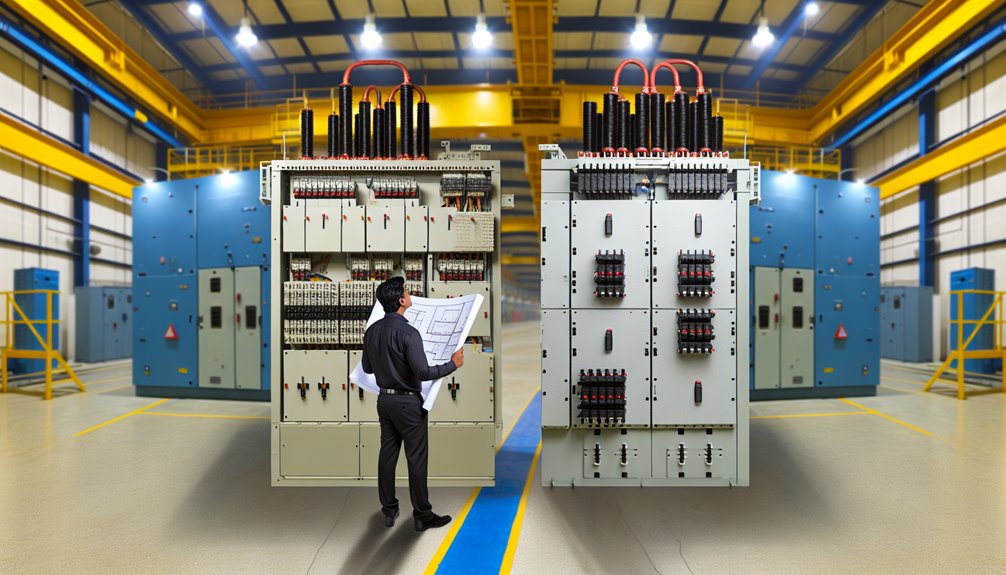
A frequent error in switchgear specification involves prioritizing cost over vital operational requirements. This approach can lead to suboptimal performance and increased long-term costs.
To guarantee effective switchgear selection, it is essential to take into account several key factors:
Addressing these common pitfalls enhances system performance and lifecycle management.
The manufacturing of switchgear, a silent guardian of electrical systems, impacts the environment through material consumption, energy use, and waste generation. Sustainable practices and ideal material choices can mitigate these effects, maintaining ecological balance and operational efficiency.
Yes, switchgear can be customized for specific industry needs. Engineers tailor components, configurations, and features to meet precise operational requirements, ensuring compatibility with existing systems and compliance with industry standards while optimizing performance, safety, and efficiency.
Switchgear design affects energy efficiency by optimizing component layout, minimizing energy loss, and ensuring reliable performance. By prioritizing compactness, reduced resistance paths, and advanced insulation, energy-efficient designs enhance operational control, reduce costs, and support sustainable energy management practices.
Training for switchgear operation and maintenance includes understanding electrical safety protocols, equipment-specific procedures, fault diagnosis, and preventive maintenance techniques. Mastery of control interfaces and familiarity with emergency handling are essential to guarantee operational reliability and personnel safety.
In the domain of switchgear design, emerging technologies include digitalization and IoT integration, promising enhanced monitoring and predictive maintenance capabilities. These advancements offer the illusion of control, reassuring managers of their omnipotence over electrical systems.
Related Article: Switchgear vs Switchboard
In summary, selecting between fixed and withdrawable switchgear requires a careful assessment of operational demands, maintenance needs, and cost considerations. Fixed switchgear suits stable, low-voltage environments, offering a compact, economical solution. Conversely, withdrawable switchgear excels in high-demand settings, guaranteeing rapid maintenance and safety. As the adage goes, "measure twice, cut once"; making an informed decision now guarantees a balance of efficiency and reliability, optimizing long-term performance for specific applications.
