Language


Electrical power systems rely on reliable distribution and protection equipment to ensure safe and continuous operation. Among these technologies, understanding what low voltage switchgear is becomes essential for engineers, facility managers, and electrical system designers.
Low voltage switchgear is a critical component used in electrical distribution networks to control, protect, and isolate circuits operating within low voltage ranges. It is widely applied in industrial production facilities, commercial complexes, data centers, and infrastructure projects where stable power supply is required.
As modern electrical systems become more complex, the demand for efficient power management and fault protection continues to grow. Low voltage switchgear helps achieve this by integrating circuit protection devices, switching mechanisms, and monitoring functions into a centralized distribution solution.
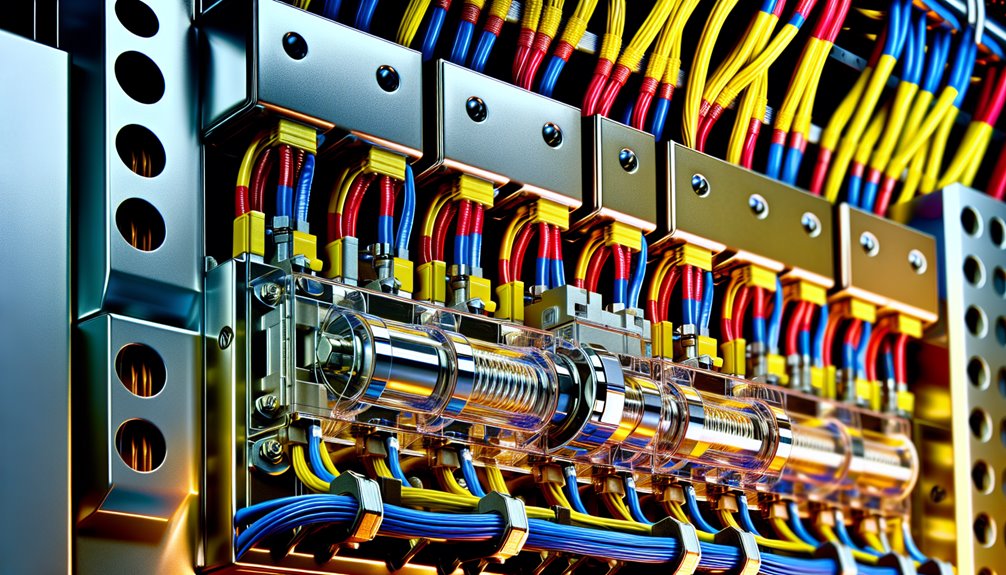
Low voltage switchgear is an electrical distribution and protection system designed to manage electricity flow in circuits operating at voltages up to 1000 volts AC or 1500 volts DC.
The primary function of low voltage switchgear is to control, protect, and isolate electrical circuits to prevent damage caused by abnormal operating conditions such as overloads, short circuits, or voltage instability.
In practical applications, low voltage switchgear serves as the main control point in power distribution rooms, allowing electricity generated from power sources to be safely transmitted to downstream equipment including motors, lighting systems, and industrial machinery.
Modern low voltage switchgear systems are often engineered to comply with international electrical safety standards and may incorporate intelligent monitoring technologies to improve operational reliability and maintenance efficiency.
Low voltage switchgear operates as a power control and protection system within electrical distribution networks. Its primary function is to ensure that electricity is delivered safely while minimizing the risk of equipment damage or operational failure.
The working process of low voltage switchgear can be understood in three basic stages: power distribution, circuit protection, and electrical isolation.
First, electricity from the main power source enters the switchgear panel and is distributed through internal conductive pathways such as busbars. The busbar system serves as the backbone of power transmission inside the switchgear, allowing electrical energy to be efficiently routed to different outgoing circuits.
Second, protection devices such as circuit breakers continuously monitor current flow within the system. When abnormal conditions occur—such as overloads, short circuits, or ground faults—the protection mechanism automatically interrupts the electrical flow. This rapid response helps prevent serious damage to connected equipment and reduces the possibility of fire hazards.
Third, low voltage switchgear also provides electrical isolation functions. During maintenance or inspection work, specific circuits can be safely disconnected without shutting down the entire power distribution system. This improves operational flexibility and enhances workplace safety for electrical technicians.
Through these mechanisms, low voltage switchgear ensures that electrical systems operate with stability, safety, and efficiency in various industrial and commercial applications.
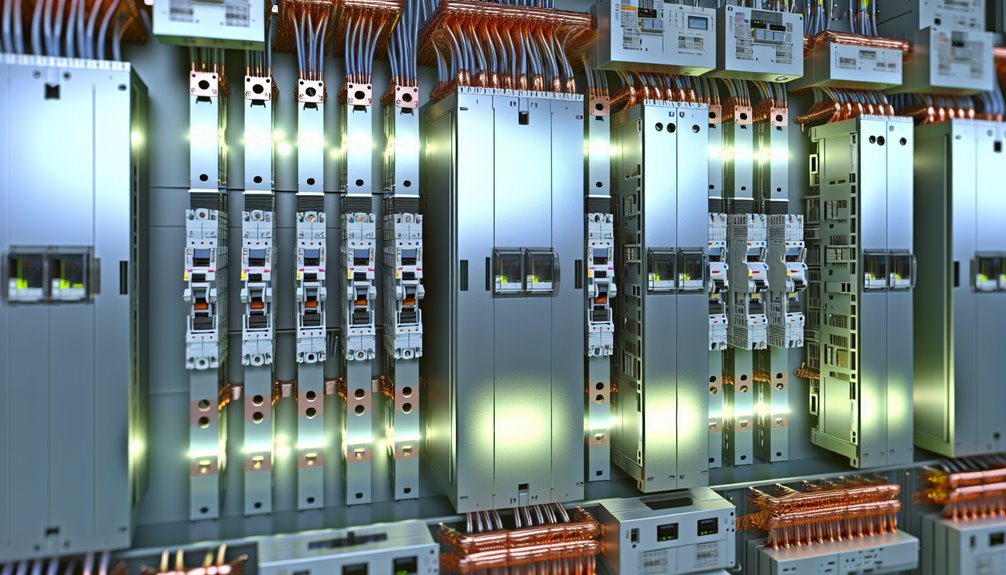
Low voltage switchgear is composed of several key electrical components that work together to ensure reliable power distribution and system protection. Each component plays a specific role in controlling, monitoring, and safeguarding the electrical network.
| Component | Function |
|---|---|
| Circuit Breaker | Protects system from overload and short circuit faults |
| Busbar | Distributes electrical power inside the panel |
| Protection Relay | Detects abnormal electrical conditions |
| Disconnect Switch | Provides circuit isolation during maintenance |
| Distribution Panel | Organizes outgoing power circuits |
Circuit breakers are one of the most important protective devices inside low voltage switchgear systems. Their main function is to automatically interrupt current flow when abnormal electrical conditions such as overloads or short circuits occur. By quickly disconnecting the affected circuit, circuit breakers help prevent equipment damage and reduce safety risks.
Disconnect switches and isolators are used to provide safe electrical separation during maintenance operations. These devices allow technicians to isolate specific sections of the electrical system while ensuring that other parts of the network continue operating normally.
The busbar system acts as the central conductor inside the switchgear panel, responsible for distributing electrical power to multiple circuits. Busbars are typically made of high-conductivity materials such as copper or aluminum to minimize energy loss and ensure efficient current transmission.
Protection relays are monitoring devices that detect abnormal operating conditions within the electrical system. When faults such as overloads or voltage fluctuations are detected, the relay sends signals to trigger circuit breaker operation and disconnect the affected circuit.
Distribution panels organize and manage outgoing electrical circuits. They help ensure that power is delivered to different equipment and load zones in a structured and controlled manner, supporting stable system operation across industrial or commercial facilities.
Together, these components form an integrated protection and control system that helps maintain the safety, reliability, and efficiency of low voltage power distribution networks.
Low voltage switchgear is specifically designed to operate within defined electrical voltage limits to ensure safe and stable power distribution.
In general, low voltage switchgear is used in electrical systems with voltage levels of up to 1,000 volts alternating current (AC) or up to 1,500 volts direct current (DC). This classification distinguishes low voltage systems from medium and high voltage distribution equipment, which are used in larger transmission networks.
Low voltage electrical distribution is commonly divided into several categories based on operating voltage. Typical ranges include 230V and 400V three-phase industrial and commercial power systems, which are widely used in manufacturing facilities, commercial buildings, and infrastructure projects.
Maintaining proper voltage operation within the specified range is essential for preventing electrical stress, overheating, and premature equipment failure. Operating switchgear outside its designed voltage limits may reduce system reliability and increase safety risks.
Manufacturers design low voltage switchgear panels according to international electrical standards to ensure compatibility with modern power distribution requirements and to support safe operation under varying load conditions.
| Voltage Level | Classification |
|---|---|
| Low Voltage | Up to 1000V AC / 1500V DC |
| Medium Voltage | 1kV – 36kV |
| High Voltage | Above 36kV |

Low voltage switchgear is widely applied in environments where safe and reliable electrical distribution is required. Its primary role is to manage and protect electrical power systems across different industries and infrastructure facilities.
In industrial manufacturing plants, low voltage switchgear is commonly installed in main distribution rooms to control power supply for production machinery, conveyor systems, and factory utilities such as ventilation and lighting. It helps ensure continuous operation while protecting equipment from electrical faults.
In commercial buildings, low voltage switchgear supports the distribution of electricity for HVAC systems, elevators, office lighting, and other building services. By regulating power flow and isolating faulty circuits, it contributes to energy efficiency and operational safety in large commercial complexes.
In data centers, low voltage switchgear plays a critical role in protecting sensitive IT equipment and server systems from power surges, overloads, and unexpected electrical disturbances. Stable power distribution is essential for maintaining uninterrupted digital services.
Low voltage switchgear is also used in residential and public infrastructure projects, including apartment complexes, transportation facilities, and healthcare institutions. In these settings, it helps ensure reliable electricity supply for daily operations and critical equipment.
Across all applications, low voltage switchgear provides a centralized solution for electrical protection, control, and power management in modern power distribution systems.
Low voltage switchgear plays a vital role in maintaining the safety, stability, and efficiency of modern electrical distribution systems. As electrical demand continues to grow across industrial and commercial sectors, reliable power protection and control have become increasingly important.
One of the primary advantages of low voltage switchgear is electrical safety protection. The system is designed to detect abnormal conditions such as overloads, short circuits, and ground faults. When these events occur, protective devices inside the switchgear automatically interrupt the electrical circuit, helping to prevent equipment damage and reduce the risk of fire hazards.
Another important function is power system reliability. Low voltage switchgear ensures continuous and stable electricity distribution by quickly isolating faulty circuits without affecting the entire network. This capability helps minimize operational downtime and supports the smooth functioning of production and service systems.
Low voltage switchgear also contributes to energy efficiency in electrical networks. By optimizing power distribution and reducing unnecessary energy losses, it helps organizations manage electricity consumption more effectively, which can lead to lower operational costs over time.
In addition, modern low voltage switchgear systems are often designed with monitoring and diagnostic capabilities, allowing operators to track electrical performance and identify potential issues before they develop into serious faults. These features improve system maintenance planning and enhance overall operational safety.
Overall, low voltage switchgear is an essential infrastructure component that supports safe, reliable, and efficient power management in a wide range of electrical applications.
Low voltage switchgear can be classified into several types based on structural design and functional characteristics. Understanding these types helps engineers and system designers select the most suitable configuration for specific applications.

Fixed low voltage switchgear is a traditional design where electrical components are permanently installed inside the panel structure. This type is relatively simple in construction and is commonly used in standard power distribution systems that do not require frequent maintenance or component replacement.
Fixed switchgear is generally cost-effective and suitable for applications with stable load conditions. However, maintenance operations may require system shutdown since internal components are not easily removable.
Withdrawable low voltage switchgear is designed with movable functional units that can be pulled out from the panel structure for maintenance or replacement. This design allows technicians to service individual components without shutting down the entire system.
This type of switchgear is widely used in industrial facilities and critical infrastructure projects where continuous power supply is required. Although the initial cost may be higher than fixed switchgear, it offers better operational flexibility and maintenance efficiency.
Intelligent low voltage switchgear integrates digital monitoring and control technologies into the electrical distribution system. These systems can provide real-time operational data, fault diagnosis information, and remote management capabilities.
Smart switchgear solutions are increasingly used in modern power systems such as data centers and automated industrial plants, supporting advanced energy management and predictive maintenance strategies.
Each type of low voltage switchgear is designed to meet specific operational requirements, and selecting the appropriate configuration depends on factors such as maintenance needs, load characteristics, and project environment.
Related Article: Fixed vs Withdrawable Switchgear
Low voltage switchgear and medium voltage switchgear are both important components of electrical distribution systems, but they are designed to operate under different voltage conditions and application requirements.
The primary difference between the two lies in their operating voltage range. Low voltage switchgear is typically used in systems operating up to 1,000 volts, while medium voltage switchgear is designed for electrical networks ranging from approximately 1 kilovolt to 36 kilovolts.
In terms of physical design, medium voltage switchgear generally requires stronger insulation materials and more complex arc protection mechanisms due to the higher electrical stress associated with increased voltage levels. Low voltage switchgear, on the other hand, is usually more compact and easier to install within distribution rooms or equipment cabinets.
Application environments also differ between the two systems. Low voltage switchgear is commonly used in industrial plants, commercial buildings, and residential infrastructure, whereas medium voltage switchgear is more often deployed in power substations and large-scale transmission distribution networks.
Maintenance requirements and operational safety standards are typically more stringent for medium voltage systems because electrical hazards increase as voltage levels rise. Low voltage switchgear provides a balance between safety, cost efficiency, and operational convenience for most downstream power distribution applications.

Selecting suitable low voltage switchgear requires careful consideration of electrical performance, operational environment, and technical specifications to ensure long-term system reliability.
The first factor to evaluate is voltage and current rating. The switchgear must be compatible with the system’s operating voltage, and the current capacity should be sufficient to support peak load conditions without causing overheating or performance degradation.
Another important consideration is protection performance. High-quality low voltage switchgear should include reliable circuit protection mechanisms such as advanced circuit breakers and fault detection systems to guard against overloads, short circuits, and electrical surges.
The installation environment also plays a significant role in equipment selection. Factors such as ambient temperature, humidity, dust levels, and corrosion risk can affect switchgear performance. For example, industrial facilities with harsh operating conditions may require switchgear designs with higher protection ratings.
Compliance with international electrical standards is essential when choosing low voltage switchgear. Certifications such as IEC and other industry regulations help ensure product safety, interoperability, and quality performance.
Finally, customization capability is important for project-based applications. Many industrial and infrastructure projects require tailored switchgear configurations to meet specific engineering and operational requirements. Working with experienced manufacturers can help ensure that the equipment is designed and manufactured to match project needs.
At Conya, we take pride in being a trusted leader in low voltage switchgear solutions. With decades of experience and a deep commitment to innovation, quality, and customer satisfaction, we deliver power distribution systems that meet the highest industry standards.
Here’s what sets Conya apart:
At Conya, we don’t just supply switchgear—we power progress with solutions designed for real-world performance and long-term value.
Ready to upgrade your power system? Contact Conya today to learn more about our low voltage switchgear solutions or request a custom quote. Let’s build smarter, safer, and more efficient electrical systems—together.
Blog Series:
Low voltage switchgear, a marvel of engineering, offers unparalleled advantages in compactness and cost-effectiveness compared to its medium and high voltage counterparts. It provides superior safety, efficiency, and reliability in managing electrical systems up to 1,000 volts.
The typical lifespan of low voltage switchgear depends on lifespan factors such as usage conditions and maintenance practices, ranging from 20 to 30 years. Warranty options vary, commonly offering 1 to 5 years, subject to manufacturer policies.
Low voltage switchgear, unlike a one-size-fits-all hat, can indeed be tailored to meet specific industrial needs. Custom solutions guarantee compliance with industry standards, promoting efficiency and safety while catering to unique operational requirements.
Environmental considerations for installing low voltage switchgear include adhering to sustainability practices and following installation guidelines. These guarantee minimal ecological impact, ideal resource use, and compliance with regulations, promoting efficient energy distribution while maintaining environmental integrity.
Imagine a fortress guarding against electrical chaos; low voltage switchgear masterfully manages power surges and voltage fluctuations through advanced surge protection and voltage regulation, ensuring peak performance and safeguarding equipment with impeccable precision and reliability.
To summarize, low voltage switchgear acts as the backbone of electrical distribution systems, orchestrating control, isolation, and protection with precision. Like a vigilant guardian, it shields circuits from potential threats, guaranteeing safety and operational efficiency across diverse applications. Its integral components and functions make it indispensable for modern infrastructure. With proper maintenance, low voltage switchgear remains a stalwart defender of electrical systems. Trusting a reliable provider like Conya guarantees peak performance and peace of mind.
