Language

Electrical power generated at plants must travel through multiple stages before it reaches homes, commercial buildings, and industrial facilities. This process—known as electrical power distribution—relies on a range of specialized devices that regulate voltage, control power flow, and protect equipment from faults or overloads. Without these components working together, electricity could not be delivered safely or efficiently across modern power networks.
Electrical distribution equipment forms the backbone of these systems. Devices such as transformers, switchgear, circuit breakers, and distribution panels ensure that electrical energy is properly stepped down, routed to the right circuits, and protected against abnormal operating conditions. In substations, factories, and large buildings, this equipment maintains system stability while preventing damage to infrastructure and ensuring safety for personnel.
This guide provides a clear electrical distribution equipment list, highlighting the most important components used in power distribution systems. Understanding the role of each device helps engineers, facility managers, and electrical professionals design more reliable electrical networks and choose the right equipment for their applications.
Electrical distribution equipment is an essential component in the electrical grid, facilitating the safe and efficient transmission and distribution of electricity from power plants to end users. This equipment plays a vital role in guaranteeing that electrical energy is conveyed at appropriate voltage levels for different applications.
Key elements include transformers, switchgear, and circuit breakers, all designed to manage, control, and protect electrical flows within the grid. Power distribution equipment is strategically used in substations, industrial facilities, and commercial settings to maintain system integrity and reliability.
Electrical power distribution systems rely on several key devices that work together to regulate voltage, control electrical flow, and protect circuits from faults. Below is a list of the most essential electrical distribution equipment commonly used in substations, industrial facilities, and commercial power systems:
These components form the core infrastructure of electrical distribution systems, ensuring electricity can be delivered safely from substations to industrial equipment, commercial facilities, and end-use loads. In the following sections, we will examine how each piece of equipment contributes to reliable and efficient power distribution.
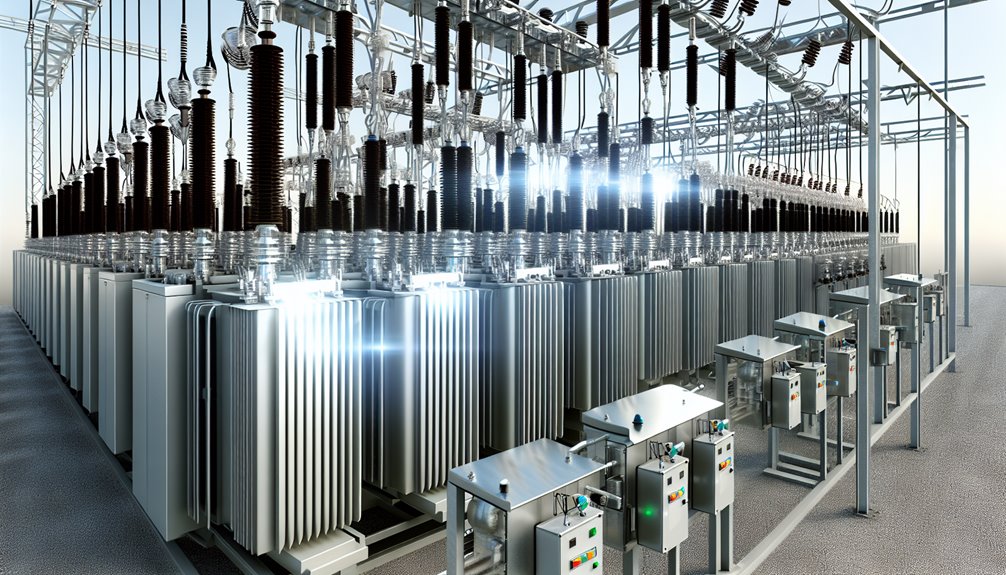
You'll recognize key components like transformers, switchgear, and circuit breakers as integral to modern power systems. Each plays a distinct role: transformers adjust voltage levels, switchgear manages and protects circuits, and circuit breakers interrupt current flow during faults.
Distribution boards and busbar systems further organize and distribute power efficiently, ensuring reliability and safety across the network.
Understanding the role of each component in the electrical distribution equipment list helps clarify how modern power systems operate safely and efficiently. The following sections explain the primary devices used to control, distribute, and protect electrical power.
Transformers play a pivotal role in modern power systems by regulating voltage levels between transmission lines and end-use applications.
As integral power distribution equipment, they guarantee seamless voltage conversion tailored for different electrical distribution devices. You'll find various types of transformers, each serving a distinct purpose.
Power transformers are critical in high-voltage transmission, while distribution transformers step down voltage for consumer use.
Instrument transformers, including current transformers (CTs) and potential transformers (PTs), offer precise measurements and safety.
By selecting the right transformer type, you enhance system efficiency, assure compatibility, and maintain control over electrical operations.
Regular maintenance and strategic deployment of these devices are key to optimizing your power distribution network.
Switchgear serves as the backbone of electrical distribution systems, providing essential protection and control for circuits. As a critical piece of electrical distribution system equipment, switchgear guarantees the safe operation of distribution substation equipment by managing power flow and isolating faults.
You’ll find it includes several key components:
With switchgear, you maintain control over the electrical distribution network, minimizing downtime and enhancing safety. Its reliability and efficiency are pivotal for modern power systems, guaranteeing ideal functionality and protection.
You May Also Like:
Circuit breakers play a fundamental role in modern power systems, providing automatic protection by interrupting electrical faults. They are essential components in the electrical distribution equipment list, ensuring system integrity by preventing damage during faults. You’ll find various types like MCB, MCCB, ACB, and VCB, each suited for different applications. Understanding their functionality allows precise control over power distribution components, enhancing system reliability.
| Type | Application | Benefit |
|---|---|---|
| MCB | Residential, Small Load | Quick response, easy reset |
| MCCB | Industrial, Large Load | Adjustable trip settings |
| ACB | High Current Systems | Handles large fault currents |
| VCB | Medium Voltage | Minimal maintenance, long life |
| SF6 | High Voltage | Excellent arc quenching properties |
Selecting the right circuit breaker is vital for effective power management.
Switchboards are pivotal in electrical distribution systems, acting as centralized power control hubs for industrial and commercial applications. They facilitate efficient management and distribution of electrical power by integrating incoming and outgoing circuits.
A switchboard is designed to direct electricity from one or more sources to several smaller regions of usage, ensuring optimal power allocation and system control.
Constructed to handle high current levels, switchboards incorporate protective devices and metering equipment. This design enables precise monitoring and control of power distribution, minimizing risks and enhancing reliability.
Unlike distribution boards, which are more localized, switchboards serve as the primary interface between power generation and end-user consumption, making them essential for maintaining the integrity and efficiency of modern power systems.
Learn More: Switchgear vs Switchboard
These boards facilitate easy access and maintenance, guaranteeing that electrical systems operate smoothly and safely.
Regular inspection and maintenance are essential to prevent disruptions and secure peak performance.
Busbar systems are integral to modern power systems, ensuring efficient electrical power distribution within substations and switchgear assemblies. You’ll find that these systems are essential in handling high currents and maintaining reliability across industrial power distribution networks.
Their design minimizes energy losses and reduces the need for complex wiring, which can enhance system efficiency considerably.
In switchgear assemblies, busbars provide a clear and organized pathway for electricity, facilitating control and isolation of various circuit components.
Their robust construction, often from copper or aluminum, supports large electrical loads and withstands mechanical stress.
Disconnect switches and isolators are critical components in electrical distribution systems, serving to guarantee safe maintenance and operational integrity.
These devices are essential for isolating sections of the network, allowing for secure maintenance without the risk of electrical hazards. Disconnect switches facilitate load and no-load switching, ensuring that circuits are de-energized before any repair or inspection activities occur. This functionality is crucial for maintaining operational safety and preventing accidental energization.
Isolators, typically used in conjunction with circuit breakers, provide a visible break in the circuit, reinforcing the assurance of safe maintenance isolation. Designed for robustness and reliability, they are indispensable in managing power distribution systems, ensuring that maintenance personnel can work with confidence and control.
Essential to the integrity of electrical distribution systems, protective relays play a critical role in fault detection and system protection coordination. These devices are a fundamental component of the electrical distribution equipment list, guaranteeing system reliability and safety.
Protective relays function by:
Their precision and reliability make protective relays indispensable for modern power systems, providing essential oversight and control to prevent equipment failure and enhance operational efficiency.
In power distribution systems, maintaining reliability is paramount, and surge protection devices play a vital role. They shield electrical equipment from voltage spikes caused by lightning or switching events, ensuring system stability.
By incorporating lightning arresters, you can effectively minimize potential damage and enhance operational safety.
These devices are essential for safeguarding critical infrastructure and maintaining uninterrupted power flow.
Implementing robust surge protection strategies allows you to take control of your distribution systems, ensuring they remain resilient and efficient under various conditions.
Fuses, integral components of electrical distribution systems, provide essential overcurrent protection by breaking the circuit when excessive current flows. This critical function safeguards equipment and minimizes risks associated with electrical faults. Fuses are designed to operate once and then require replacement, ensuring precise and reliable operation.
Key aspects of fuses include:
Their simplicity and reliability make them indispensable in modern power systems.
Capacitor banks play an essential role in modern power systems by enhancing power factor and improving overall efficiency. By reducing reactive power demand, they effectively decrease the total power required from the grid.
Placing them close to the load minimizes transmission losses and optimizes voltage profiles. This strategic positioning enhances distribution system capacity and reliability, vital for maintaining control over power quality.
You’ll find that capacitor banks operate through a series-parallel configuration, enabling precise adjustment to meet system demands. Their ability to act as reactive power generators guarantees that your system maintains stability, even under varying load conditions.
Regular monitoring and maintenance are critical to guarantee they operate at peak performance, providing you with a robust, efficient power infrastructure.
An Uninterruptible Power Supply (UPS) serves as a critical component in electrical distribution systems, ensuring continuous power delivery and safeguarding against outages. This device is indispensable for maintaining operational integrity in environments reliant on consistent power.
The UPS offers several advantages:
The UPS is essential in data centers, medical facilities, and industrial control environments, offering peace of mind and operational continuity.
Metering equipment is a critical component of electrical distribution systems, providing precise measurement and monitoring of electrical parameters. Key elements include energy meters, current transformers (CTs), and voltage transformers (VTs).
Energy meters quantify electricity consumption, guaranteeing accurate billing and load management. CTs are essential for measuring high current levels by transforming them into manageable values, enabling safe and effective monitoring.
VTs perform a similar function for voltage, reducing high voltages to lower, safer levels for precise measurement without disrupting the system. Integrating these components guarantees a thorough understanding of electrical consumption patterns, enhancing efficiency and reliability.
Properly calibrated metering equipment is indispensable for optimizing energy distribution and maintaining control over electrical infrastructures.
Power Distribution Units (PDUs) play an essential role in managing power distribution within data centers and industrial environments. They guarantee efficient delivery of electrical power to multiple devices, maintaining system reliability. PDUs are designed to handle high power loads, offering features such as circuit protection and power monitoring. They can be tailored to specific needs, enhancing control over power distribution.
| Feature | Description |
|---|---|
| Load Capacity | Supports high power densities |
| Circuit Protection | Prevents overload and short circuits |
| Power Monitoring | Enables real-time energy tracking |
PDUs are integral to optimizing power usage, reducing downtime, and guaranteeing safety. They provide flexibility in configuration and are essential for environments demanding constant power availability and precise control over electrical infrastructure.
Within data centers and industrial environments, efficient management of electrical power distribution is essential. Motor Control Centers (MCCs) play an important role in centralizing motor management, ensuring streamlined operations and enhanced safety.
MCCs house various components, including motor starters, fuses, circuit breakers, and relays, all fundamental for:
Electrical enclosures play an essential role in housing and protecting electrical components within distribution systems. They are designed to safeguard against environmental factors and guarantee the safety and longevity of electrical equipment.
Indoor enclosures typically provide protection from dust and accidental contact, while outdoor enclosures must withstand harsher conditions, such as rain and temperature fluctuations. Both types are critical for maintaining the integrity of electrical systems, offering varying degrees of ingress protection (IP) ratings to meet specific environmental challenges.
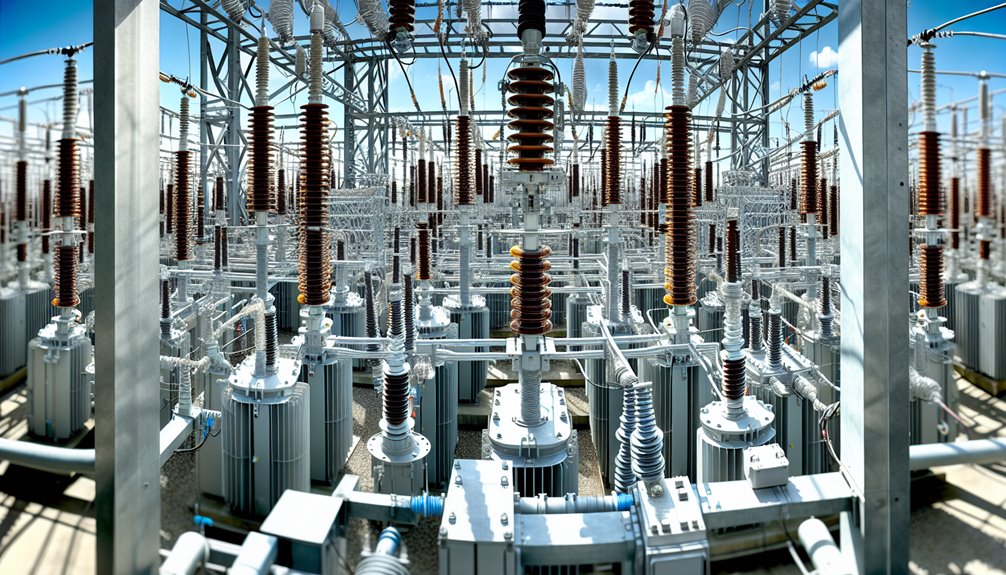
You must understand the essential role of supporting equipment like insulators, earthing, and grounding systems in power distribution systems.
Insulators maintain conductor separation and prevent electrical faults, while earthing and grounding systems protect against power surges by directing excess electricity safely into the ground.
Effective conduit and cable management systems guarantee organized and secure routing of electrical cables, vital for maintaining system reliability and safety.
Insulators play a critical role in power distribution systems by isolating electrical conductors from grounded structures, guaranteeing safety and system reliability. They prevent unwanted current flow, which could lead to system failures or hazards.
Understanding the types and applications of insulators is essential for maintaining control over your power systems.
Grounding systems, vital in power distribution networks, guarantee safety by preventing electrical faults. They protect both equipment and personnel by directing fault currents safely into the ground, minimizing the risk of electric shock or fire.
In a substation, proper earthing makes certain that all non-current carrying metal parts are at the same potential, reducing voltage differences that could cause harm.
You’ll find that implementing a robust grounding system involves using conductive materials like copper rods or plates, buried strategically to create low-resistance paths.
Regular testing and maintenance are essential to verify the integrity of these systems, as corrosion or physical damage can compromise their effectiveness.
While guaranteeing efficient power distribution, conduit and cable management systems play an essential role in routing and protecting electrical wiring. They’re critical for maintaining system integrity and preventing electrical hazards in distribution networks.
By implementing effective management strategies, you can enhance the reliability and safety of your power systems. Consider the following key points:
These systems provide a structured approach to managing cables, fundamental for minimizing downtime and optimizing performance.
Implementing robust conduit solutions helps you maintain control over your electrical infrastructure.
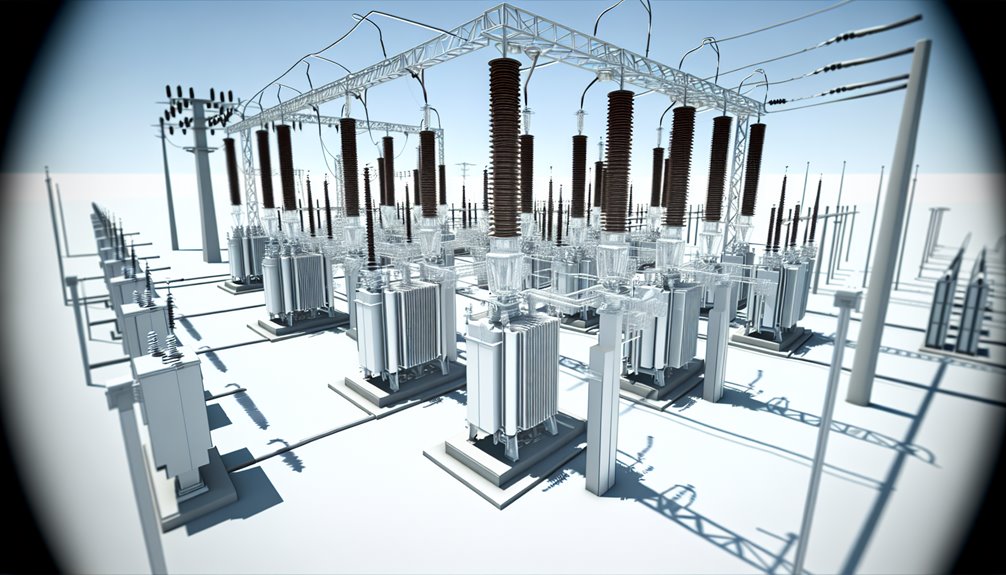
In a well-designed electrical distribution system, utility power flows through a transformer, which adjusts the voltage to suitable levels for further distribution. This transformation is essential for efficiency and compatibility with connected equipment.
Next, switchgear acts as the control center, protecting and isolating circuits, guaranteeing that power flows safely and effectively. It’s your safeguard against overloads and faults, minimizing risks of damage or downtime.
Switchgear is the control center, ensuring safe power flow and protection against overloads and faults.
From there, power is routed through distribution panels. These panels organize and manage various circuit pathways, providing you with precise control over power distribution to different loads.
Each component—transformer, switchgear, and distribution panels—works seamlessly to guarantee a stable and reliable electrical supply, tailored to meet your specific operational needs.
Electrical distribution equipment is classified by voltage level into low, medium, and high voltage categories, each serving specific roles within the power distribution network.
Low voltage equipment, such as panelboards and circuit breakers, manages electrical systems up to 1kV, focusing on residential and commercial applications.
Medium and high voltage equipment, including transformers and switchgear, handle voltages ranging from 1kV to over 35kV, ensuring efficient power transmission and system protection for industrial and utility-scale operations.
Low voltage distribution equipment plays an essential role in managing power delivery to residential, commercial, and light industrial applications. This equipment guarantees the safe and efficient distribution of electricity at voltages typically below 1,000 volts.
Key components include:
Such equipment is critical for maintaining a stable and reliable power supply.
Medium voltage distribution equipment serves a pivotal role in delivering electricity to larger industrial and commercial applications, typically operating within the 1kV to 35kV range.
This equipment includes switchgear, transformers, and circuit breakers, each essential for efficient power management and system reliability.
Switchgear controls and protects electrical circuits, guaranteeing safe maintenance and operation. Medium voltage transformers adjust voltage levels for peak power delivery to end-users. Circuit breakers safeguard systems by interrupting fault currents, thereby preventing equipment damage.
Each component is engineered for robustness, designed to handle substantial electrical loads while minimizing energy loss. Their integration within a power system guarantees operational efficiency and stability, meeting the demands of modern infrastructure with precision and reliability.
High voltage distribution equipment plays an essential role in transmitting electrical power over long distances with minimal loss. This equipment is designed to handle voltages typically above 69 kV.
Key components include:
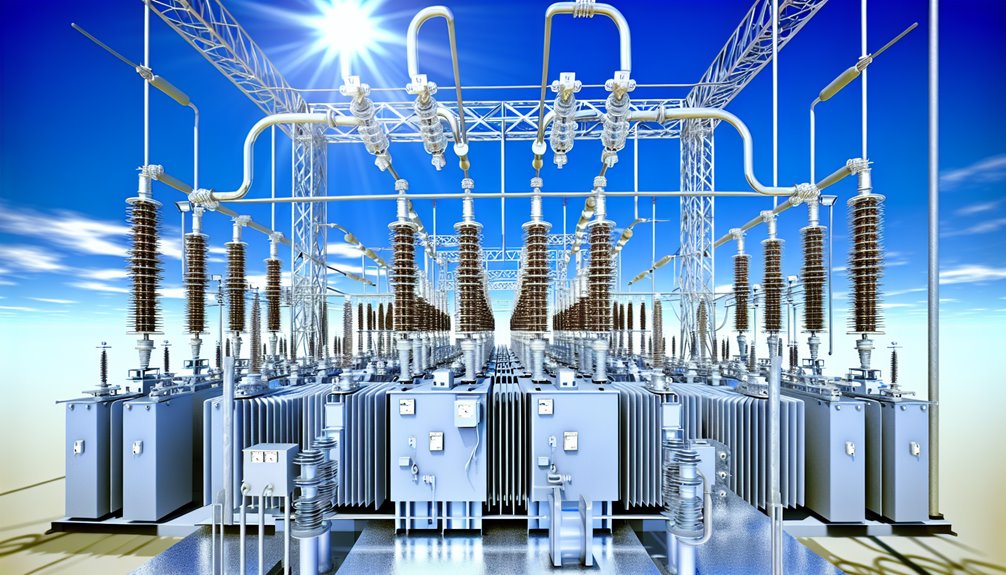
Selecting appropriate electrical distribution equipment necessitates an evaluation of load requirements, voltage, and current ratings to guarantee system compatibility and efficiency.
Consideration of environmental conditions is vital for equipment durability and reliability, while planning for future expansion secures scalability.
Adherence to compliance standards is essential for safety and regulatory conformity.
Understanding load requirements is vital in choosing the appropriate electrical distribution equipment. Accurate load assessment guarantees that systems operate efficiently and reliably.
Key considerations include:
Careful evaluation of these factors allows for precise equipment selection, optimizing performance and longevity of the power distribution systems.
This strategic approach aligns infrastructure with operational needs, guaranteeing control and efficiency.
When determining the appropriate electrical distribution equipment, voltage and current ratings are paramount considerations, as they define the operational limits of the system and guarantee compatibility with connected loads. Selecting equipment with the correct ratings guarantees efficiency, safety, and reliability. Voltage ratings dictate the maximum voltage the equipment can handle without insulation breakdown, while current ratings determine the maximum current it can conduct without overheating.
The following table outlines typical voltage and current ratings:
| Equipment Type | Voltage/Current Rating |
|---|---|
| Distribution Transformer | 11kV/400A |
| Circuit Breaker | 33kV/1000A |
| Lightning Arrester | 11kV/500A |
| Air Break Switch | 33kV/800A |
| Insulator | 11kV/250A |
Careful evaluation of these parameters is essential to maintain operational integrity.
Evaluating voltage and current ratings is fundamental for guaranteeing compatibility with connected loads, thereby maintaining system efficiency and reliability.
Equally crucial is considering environmental conditions, which directly affect the performance and longevity of electrical distribution equipment. Factors such as temperature, humidity, and altitude impact equipment operation.
Addressing these factors guarantees peak performance and enhances the resilience of power systems in varied environments.
Planning for future expansion in electrical distribution systems demands meticulous consideration of scalability and adaptability. Selecting equipment that accommodates increased load demands without compromising efficiency is essential.
Analyzing load growth projections allows for the design of systems with sufficient capacity margins. Modular components, such as expandable switchgear and transformers with tap-changing capabilities, provide flexibility.
Integration of advanced monitoring systems enables real-time assessment and optimization, supporting proactive adjustments. Guaranteeing compatibility with emerging technologies and renewable energy sources is critical for long-term viability.
Additionally, infrastructure should be designed to facilitate seamless upgrades, minimizing disruption. Strategic investments in versatile equipment guarantee that systems remain robust and responsive to evolving requirements, aligning with industry advancements and organizational goals.
Compliance with industry standards is essential when selecting electrical distribution equipment, as it guarantees safety, reliability, and efficiency. Standards guarantee systems perform at their best and reduce risks.
Three critical compliance aspects include:
For those prioritizing control, alignment with these standards is non-negotiable, guaranteeing systems are both effective and compliant with regulatory requirements.
This strategic adherence supports long-term operational success.
Electrical distribution equipment plays a critical role across various sectors, including industrial manufacturing plants, commercial buildings, data centers, utilities, substations, and renewable energy projects.
In industrial settings, equipment such as transformers and circuit breakers guarantees efficient voltage management and protection.
Meanwhile, data centers and commercial buildings rely on uninterruptible power supply systems and switchgear to maintain operational continuity and safety.
In industrial manufacturing plants, efficient power distribution is essential for maintaining operational efficiency and safety. Electrical distribution equipment must be meticulously chosen and maintained to support complex operations.
Key components include:
Commercial buildings demand sophisticated electrical distribution systems to guarantee operational efficiency and safety. These systems typically encompass transformers, switchgear, and panelboards, which manage and distribute power effectively.
Transformers adjust voltage levels to meet the specific requirements of various applications, ensuring compatibility with diverse equipment. Switchgear, including circuit breakers and disconnect switches, offers protection against electrical faults, enabling safe isolation and maintenance of electrical systems.
Panelboards serve as centralized hubs for circuit management, facilitating organized distribution and control. Additionally, Uninterruptible Power Supply (UPS) systems provide essential backup power to sustain operations during outages.
Each component plays a vital role in minimizing downtime, optimizing energy usage, and maintaining the integrity of electrical infrastructure in commercial environments.
Although data centers demand precision and reliability, their electrical distribution systems are complex and meticulously designed to guarantee uninterrupted operations. These systems are essential in maintaining the integrity and efficiency of data processing tasks.
Key components include:
These components must be regularly maintained and monitored to secure peak performance, reducing the risk of failures that could disrupt data center operations.
Utilities and substations serve as critical nodes in the electrical distribution network, facilitating the efficient transfer of electricity from generation sources to consumers.
These facilities incorporate key equipment such as transformers, circuit breakers, and switchgear to manage voltage levels, protect against overloads, and guarantee operational reliability.
Transformers adjust voltage for safe transmission, while circuit breakers provide protection by interrupting fault currents.
Switchgear enables control and isolation of electrical systems, ensuring maintenance safety and system integrity.
Insulators support conductors, preventing faults and ensuring personnel safety.
Capacitor banks improve power factor and reduce demand on the grid.
Regular maintenance and diagnostic testing of these components are essential to prevent failures and optimize performance, securing a stable and reliable power supply.
Incorporating electrical distribution equipment is essential in renewable energy projects, as it guarantees the seamless integration of power generated from renewable sources into the grid. This equipment assures reliable, efficient, and stable power delivery.
Key components include:
These components are fundamental in optimizing the performance and reliability of renewable energy systems, assuring they meet the rigorous demands of modern power networks.
As electrical distribution systems evolve, the integration of smart technologies is becoming increasingly essential. Smart distribution systems utilize digital switchgear and advanced monitoring to enhance efficiency and reliability.
Digital switchgear offers real-time data, enabling precise control and diagnostics. Predictive maintenance leverages analytics to anticipate equipment failures, reducing downtime and maintenance costs. This proactive approach guarantees system integrity and optimizes resource allocation.
Furthermore, energy management integration facilitates seamless operation with renewable sources, enhancing sustainability and grid stability. These advancements align with the growing demand for intelligent infrastructure, guaranteeing robust, adaptable power distribution networks.
The focus remains on improving performance while minimizing environmental impact, reflecting a progressive shift towards smarter, more resilient energy solutions.
Electrical power distribution systems use several key components to control, protect, and deliver electricity safely. The most common equipment includes transformers, switchgear, circuit breakers, distribution boards, busbars, surge protection devices, capacitor banks, and uninterruptible power supply (UPS) systems. Together, these devices regulate voltage, manage power flow, and protect electrical networks from faults.
While every component plays an important role, transformers, switchgear, and circuit breakers are considered the core equipment in most power distribution systems. Transformers regulate voltage levels, switchgear manages and isolates electrical circuits, and circuit breakers protect the system by interrupting faults or overload conditions.
A circuit breaker is a single protective device that interrupts electrical faults automatically. Switchgear, on the other hand, is a broader system that includes circuit breakers along with other devices such as disconnect switches, protective relays, and control systems used to manage and protect electrical networks.
Electrical distribution equipment is commonly installed in substations, industrial plants, commercial buildings, data centers, and utility power networks. These installations allow electricity to be stepped down, distributed to multiple circuits, and protected from faults before reaching end users.
Inspection frequency depends on the type of equipment and operating conditions. In most facilities, preventive inspections are performed annually, while critical equipment such as switchgear and circuit breakers may require more frequent testing to ensure reliable operation and compliance with safety standards.
Capacitor banks are used to improve power factor and increase system efficiency. By compensating for reactive power, they reduce energy losses, improve voltage stability, and help electrical systems operate more efficiently.
Electrical distribution systems depend on a range of specialized equipment to deliver electricity safely and efficiently from substations to end users. Components such as transformers, switchgear, circuit breakers, distribution boards, and busbar systems each play a critical role in regulating voltage, controlling power flow, and protecting electrical networks from faults or overloads. Together, these devices form the backbone of modern power infrastructure used in industrial facilities, commercial buildings, and utility grids.
Understanding the key elements in an electrical distribution equipment list helps engineers, facility managers, and project planners design more reliable power systems and choose the right equipment for their operational needs. Proper selection, installation, and maintenance of distribution equipment not only improves system performance but also enhances safety and long-term reliability.
If you are planning a power distribution project or upgrading an existing electrical system, selecting the right equipment is essential. Our team can help you evaluate system requirements and identify the most suitable distribution solutions for your application. Feel free to get in touch to discuss your project or explore available equipment options.
