Language

Switchgear plays an essential role in the stability and efficiency of contemporary power systems. It is vital for fault isolation, component protection, and power flow management across various environments. From industrial plants to renewable energy setups, advanced technologies like vacuum and gas-insulated switchgear enhance both safety and operational resilience. These systems are key in accommodating renewable integration and minimizing downtime. What challenges and innovations lie within this evolving landscape?
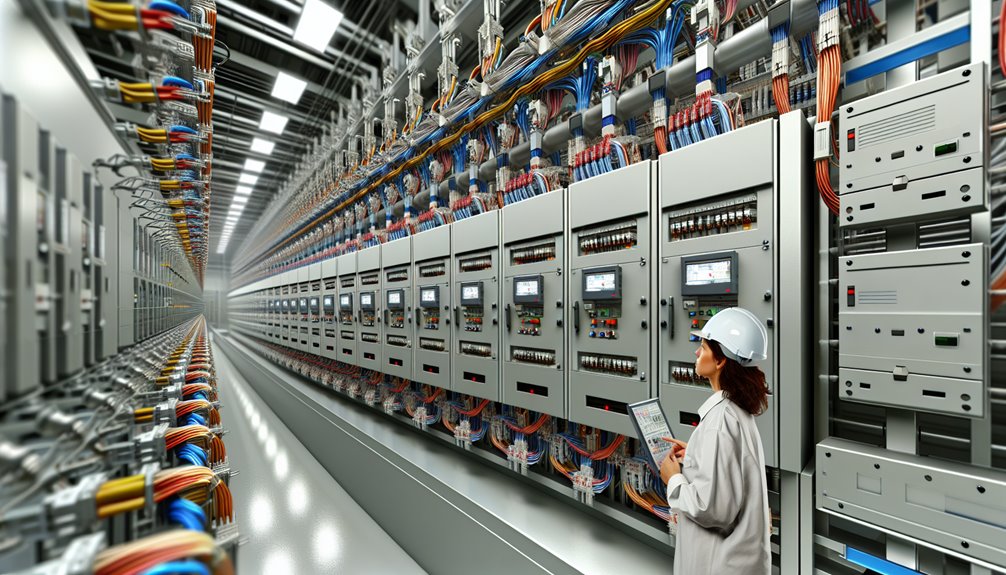
Switchgear plays an essential role in various power distribution systems, including power generation facilities and electrical substations. It guarantees the safe control and distribution of electricity in industrial manufacturing plants, where it manages high-power equipment and production lines.
Additionally, data centers and mission-critical infrastructures depend on switchgear for motor control, protection, and seamless integration of backup power systems.
In power generation facilities, effective management of electrical output from generators is vital for maintaining system reliability and efficiency. Switchgear applications play an important role in power systems by providing generator protection and isolation.
Electrical switchgear applications guarantee safe operation and maintenance, minimizing downtime and enhancing control over the power distribution process.
Key areas where switchgear is utilized include:
Switchgear in substations further enhances the ability to control and monitor power distribution effectively, supporting overall system integrity.
Electrical substations play an essential role in the utility grid infrastructure by managing the distribution and regulation of electricity. They utilize industrial switchgear applications to guarantee efficient load distribution between feeders and provide fault isolation in utility networks.
Switchgear is vital for transmission switching and protection, maintaining the stability and reliability of the grid. In renewable energy systems, switchgear facilitates seamless integration with conventional networks, enhancing operational flexibility.
Its uses in industry extend to safeguarding critical processes by controlling electrical flows and isolating faults swiftly. By incorporating various switchgear types, substations enable precise control over power distribution, fostering a resilient and adaptable energy infrastructure.
This strategic implementation guarantees uninterrupted service and aligns with modern energy demands.
Substations exemplify how strategic infrastructure underpins energy distribution, and a similar approach is adopted in industrial manufacturing and processing plants. Here, switchgear plays an essential role in power distribution systems, ensuring operational efficiency and safety.
The integration of switchgear involves several critical functions:
These strategic applications enable precision in managing high-power demands, thereby bolstering reliability and control in industrial settings.
Commercial buildings and large facilities depend on reliable electrical distribution to power systems such as lighting, HVAC, elevators, and security equipment. Switchgear helps control and protect these electrical circuits while ensuring safe and stable power delivery across the building.
In these environments, switchgear is typically used in main distribution rooms and sub-distribution panels to manage power across different floors or zones. It also supports backup power systems, allowing buildings to maintain essential operations during outages.
Typical switchgear applications include:
In demanding industrial environments, switchgear plays a vital role in managing high-power electrical equipment. This is especially true in data centers and mission-critical infrastructure, where reliable power distribution is essential.
Switchgear guarantees robust operation through:
These applications underscore the necessity of switchgear in environments where reliability and precision are non-negotiable.
Switchgear is essential in the efficient integration of renewable energy sources into power distribution systems. It guarantees seamless operation by managing the connection of solar farms and wind turbines to the grid.
In solar farms, switchgear protects inverters from faults and facilitates maintenance without interrupting power flow. For wind turbines, it manages grid connection, guaranteeing stability and reliability even under fluctuating conditions.
Switchgear also plays a vital role in energy storage systems, allowing safe switching and isolation, thereby enhancing system flexibility and resilience. By providing overcurrent protection and fault isolation, switchgear maintains continuous operation and protects equipment.
Its application in renewable energy systems consequently empowers operators with control over complex networks, guaranteeing efficient, reliable, and safe power distribution.
Switchgear applications vary considerably across different voltage levels, each serving specific functions within power systems.
Low voltage switchgear is primarily utilized in residential and commercial settings, ensuring safety and efficient power distribution.
Meanwhile, medium and high voltage switchgear are critical in industrial and utility sectors, providing robust control and protection for larger scale electrical networks.
Low voltage switchgear, a cornerstone in modern electrical systems, plays an essential role in managing electrical flow in various environments. It is vital for ensuring safety and efficiency in building distribution systems, industrial control panels, and commercial power systems.
The applications of low voltage switchgear are diverse and significant:
Although often overlooked, medium voltage switchgear is essential in the seamless distribution of electrical power across various sectors. It operates between 1kV and 35kV, playing a critical role in industrial power distribution, renewable energy plants, and utility distribution networks.
By efficiently controlling electrical power flow, it guarantees reliability and safety through fault interrupters and circuit breakers, swiftly isolating faults while maintaining system integrity. Medium voltage switchgear facilitates the smooth re-energization of circuits post-issue resolution, preventing damage with overcurrent protection.
The use of advanced insulation types such as vacuum and gas-insulated switchgear enhances performance in diverse environments. This adaptability makes medium voltage switchgear indispensable for maintaining control and guaranteeing uninterrupted power supply in modern power systems.
High voltage switchgear is essential for the reliable and efficient transmission of electricity across vast distances. It plays a critical role in grid-level switching operations, ensuring stability and safety in power systems.
This switchgear is pivotal in transmission substations, where it controls and protects circuits from potential faults. Its application in power generation facilities allows for seamless integration of electricity into the grid, maintaining an uninterrupted power supply.
Key applications include:
These applications underscore the importance of high voltage switchgear in modern power systems.
Environmental and installation considerations play a vital role in determining the suitability of switchgear applications for indoor or outdoor settings.
Indoor switchgear must address space constraints and ventilation requirements, while outdoor installations need to withstand varying weather conditions and potential exposure to contaminants.
The choice between these settings impacts the design, materials, and protective features necessary for peak performance and safety.
Switchgear plays an essential role in indoor settings, safeguarding electrical systems within controlled environments. These applications demand careful consideration of specific factors to guarantee ideal functionality.
Although subject to environmental challenges, outdoor switchgear applications are essential for maintaining electrical system reliability in exposed settings. These applications must withstand adverse weather, temperature fluctuations, and potential contamination. Proper design and material selection are critical to guarantee durability and performance in such conditions.
Gas Insulated Switchgear (GIS) is often preferred for its compactness and resistance to harsh environments. It effectively prevents moisture intrusion and provides robust insulation.
Installation considerations include adequate clearance for safety and accessibility for maintenance. Reliable control and monitoring systems are fundamental, allowing operators to manage operations remotely and respond swiftly to any anomalies.
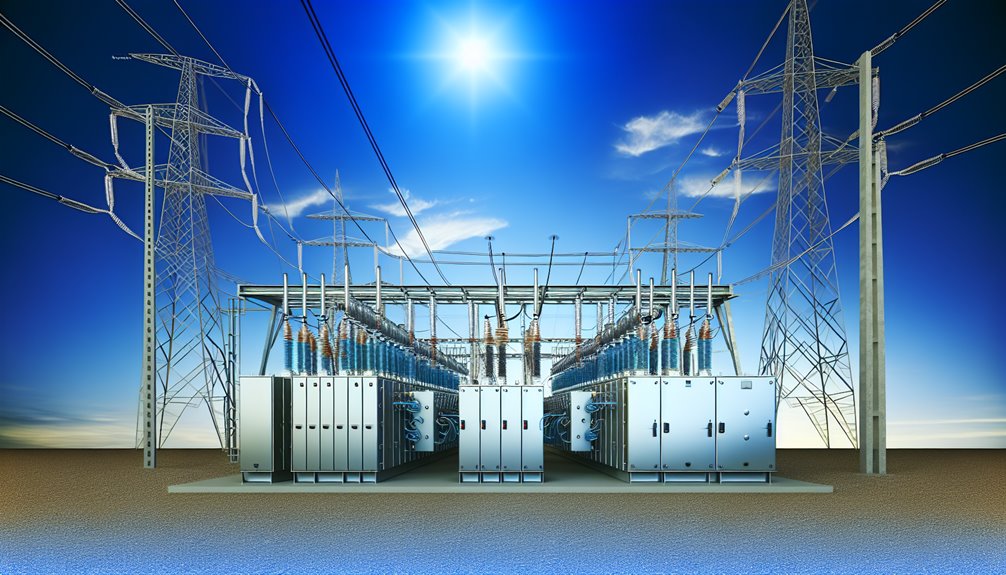
Selecting the appropriate switchgear for a particular application requires evaluating the electrical system, operating environment, and reliability expectations. Because switchgear is responsible for protecting equipment and maintaining system stability, choosing the wrong configuration can lead to operational risks, equipment damage, or costly downtime. The following factors should be considered when determining the most suitable switchgear for a given application.
The first consideration is the operating voltage of the electrical system. Switchgear must be designed to safely handle the voltage and current levels present in the network.
Selecting switchgear with the correct voltage rating ensures safe operation and reliable fault protection.
Environmental conditions significantly influence switchgear selection. Different installations require equipment that can withstand specific physical and operational challenges.
For example:
In harsh environments, specialized enclosures and insulation systems may be necessary to maintain safe and stable operation.
Certain facilities require extremely high levels of electrical reliability. In applications such as data centers, hospitals, and industrial processing plants, power interruptions can lead to major operational disruptions.
When reliability is critical, switchgear systems are often designed with:
These features allow the system to quickly isolate faults and maintain power continuity to essential loads.
Switchgear must provide adequate protection against electrical faults such as short circuits, overloads, and ground faults. The protection scheme should be designed according to the electrical system configuration and the types of equipment connected to it.
Key considerations include:
Proper protection design ensures that faults are cleared quickly while minimizing damage to equipment and infrastructure.
Electrical systems often expand as facilities grow or operational demands increase. Selecting switchgear that supports future upgrades or capacity expansion can reduce the need for major system modifications later.
Design features that improve long-term flexibility include:
Planning for expansion allows power systems to adapt to changing energy demands without significant disruption.
Modern switchgear includes arc flash protection, insulation monitoring, and remote control capabilities, enhancing safety. It integrates advanced fault detection systems and protective relays, ensuring swift isolation of faults, thereby maintaining operational integrity and reducing risks.
Switchgear enhances energy efficiency by minimizing losses through precise control and protection of electrical systems. It optimizes power distribution, guarantees rapid fault isolation, and facilitates seamless integration of renewable energy sources, meeting the demands of energy-conscious stakeholders.
Advancements in switchgear technology include digital monitoring systems, enhanced automation, compact designs, and eco-friendly insulation materials like vacuum and air. These innovations increase efficiency, reliability, and safety, catering to modern demands for precise control and minimal environmental impact.
Switchgear maintenance, like a conductor orchestrating a symphony, involves meticulous inspections, testing, and timely component replacements. Maintenance protocols guarantee seamless power flow, empowering operators with control and preventing unexpected disruptions in the electrical symphony.
The cost implications of different switchgear types vary greatly. Air Insulated Switchgear (AIS) is generally more affordable but bulkier, while Gas Insulated Switchgear (GIS) and SF6 options are costlier due to advanced technology and compact design.
In modern power systems, switchgear plays a central role in maintaining stability, safety, and operational continuity. By isolating faults, controlling power flow, and protecting critical equipment, switchgear ensures that electrical networks—from industrial plants to data centers—operate reliably even under demanding conditions. As energy infrastructure evolves to accommodate renewable power sources, digital monitoring, and increasingly complex distribution networks, the importance of well-designed switchgear systems continues to grow.
Behind the scenes, these systems quietly manage the challenges of load fluctuations, environmental stresses, and fault conditions, helping power systems run smoothly and safely. In many ways, switchgear acts as the unseen guardian of electrical infrastructure, keeping operations stable while enabling innovation across modern energy systems.
Looking for reliable switchgear solutions for your power distribution project?
Our team provides customized electrical enclosures and switchgear solutions designed to meet the safety, performance, and environmental requirements of modern industrial and commercial applications. Contact us today to discuss your project requirements and find the right solution for your system.
