Language

Industrial power distribution solutions are essential for maintaining reliable facility operations by efficiently managing large electrical loads. These systems integrate advanced components like transformers and switchgear to enhance safety and reduce downtime. With a focus on optimizing energy distribution and complying with standards such as IEC and IEEE, they guarantee seamless industrial performance. The inclusion of renewable energy sources further enhances system reliability and sustainability, prompting a closer examination of their critical role in modern industry.
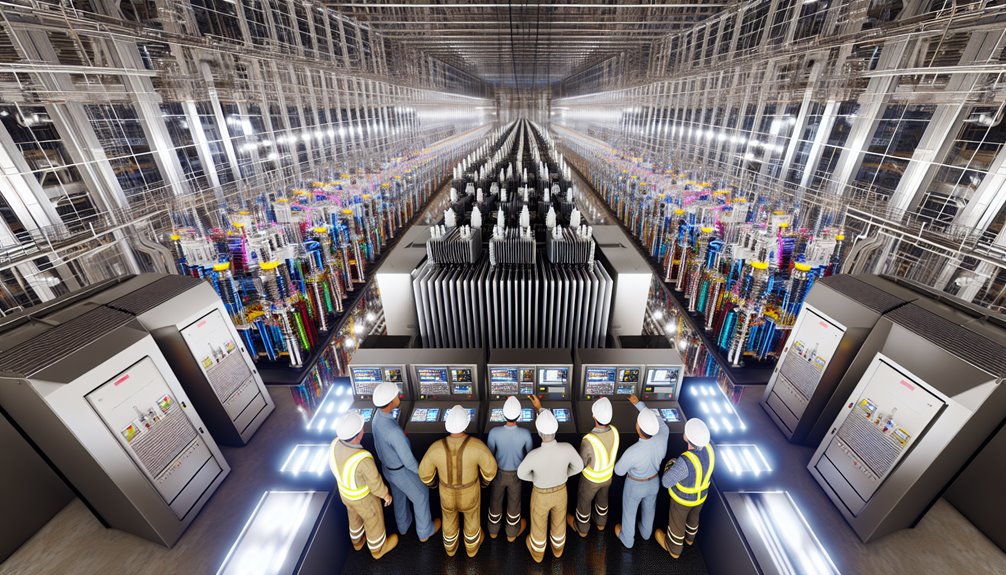
Industrial power distribution represents a sophisticated network designed to handle substantial electrical loads, distinct from commercial or residential systems. This complexity arises from the need to manage high voltage levels, guaranteeing they are converted to operational voltages suitable for industrial machinery and equipment.
Industrial electrical power systems prioritize uptime and safety, essential for maintaining continuous operations and mitigating risks. These systems incorporate robust industrial power distribution solutions, engineered for resilience and efficiency, accommodating the demanding electrical loads of industrial facilities.
They guarantee that electricity is distributed reliably across different zones within a plant, adhering to stringent safety standards. The intricate design of these systems supports large-scale operations, emphasizing energy efficiency and the seamless integration of advanced components for peak performance.
The core objectives of an industrial power distribution system are meticulously crafted to achieve operational reliability, electrical safety, energy efficiency, and scalability for future expansion.
Industrial power distribution is engineered to guarantee consistent electrical distribution systems performance, minimizing downtime through robust design and preventive measures.
Electrical safety is paramount, with systems designed to prevent hazards and protect personnel, adhering to stringent safety codes and regulations.
Energy efficiency is achieved by optimizing voltage levels and minimizing losses, guaranteeing cost-effective operations while reducing environmental impact.
Scalability accommodates future expansion needs, enabling facilities to adapt to growing demands without extensive overhauls.
These objectives collectively guarantee that industrial power distribution systems maintain efficient and secure operations, supporting the dynamic needs of industrial facilities.
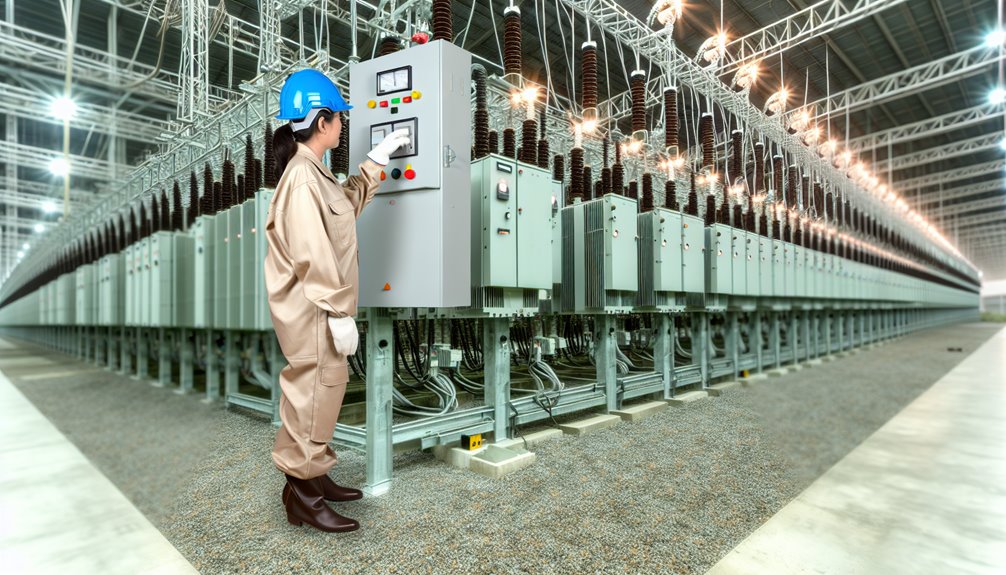
In industrial power distribution, the key building blocks consist of interconnected components that guarantee efficient energy flow and safety.
Power transformation and voltage management are achieved through transformers and switchgear, which regulate and protect electrical circuits.
Meanwhile, busbars, busways, and distribution boards facilitate power routing and division, forming a cohesive system essential for reliable industrial operations.
Within the domain of industrial power distribution, power transformation and voltage management are essential components. These elements guarantee optimal functionality and safety by converting high-voltage electricity into lower, usable voltages, necessary for various industrial applications.
In this context, transformers serve as a significant aspect of power distribution solutions, facilitating voltage transformation. They manage voltage levels by stepping them up or down, thereby enabling efficient power delivery across industrial switchgear systems.
The integration of modern transformer designs enhances energy efficiency and reduces losses, important for maintaining reliable operations. Additionally, effective voltage management through HT and LT breakers guarantees circuit protection and electrical safety, thereby stabilizing power distribution systems in industrial environments.
This meticulous management is critical for sustaining operational integrity.
When examining the core of industrial power distribution, switchgear and protection systems emerge as pivotal elements that guarantee both asset integrity and personnel safety.
These systems are integral in managing the seamless operation of power distribution equipment by performing the following functions:
Thus, switchgear and protection systems are fundamental to robust industrial power distribution.
Busbars and busways form the backbone of efficient power routing in industrial power distribution systems. These components are essential for effective industrial power management, providing a streamlined approach to electrical power distribution design.
Busbars, typically made of copper or aluminum, are designed to conduct large current flows, minimizing energy loss and optimizing performance. Their robust construction supports the demands of industrial environments by ensuring reliable electricity distribution across multiple circuits.
Busways offer flexible power routing, allowing direct connections to machinery and enabling easy system expansion. This adaptability is vital in factories and plants, where operational efficiency and system reliability are paramount.
Together, busbars and busways enhance the overall resilience of power distribution systems, ensuring continuous facility operations.
Distribution boards and panel systems are fundamental components of industrial power distribution, providing centralized control and protection for electrical circuits. These systems are pivotal in managing factory power distribution within industrial electrical infrastructure.
Key features include:
Each element is essential for reliable facility operations.
Industrial power distribution architectures are fundamental to ensuring efficient and reliable power delivery within facilities. These systems are designed to meet the diverse power requirements of industrial operations, utilizing centralized, decentralized, and zone-based distribution methods.
Centralized systems consolidate power distribution from a single point, offering straightforward management but limited flexibility. Decentralized or zone-based architectures distribute power closer to points of use, enhancing adaptability and reducing transmission losses.
Centralized systems offer simplicity, while decentralized architectures boost adaptability and minimize transmission losses.
For critical loads, redundant and dual-feed configurations are employed, providing alternate power paths to maintain operations during failures. These architectures are selected based on load demand, facility layout, and reliability needs.
Each system aims to optimize energy efficiency and operational continuity, ensuring effective power management across industrial environments.
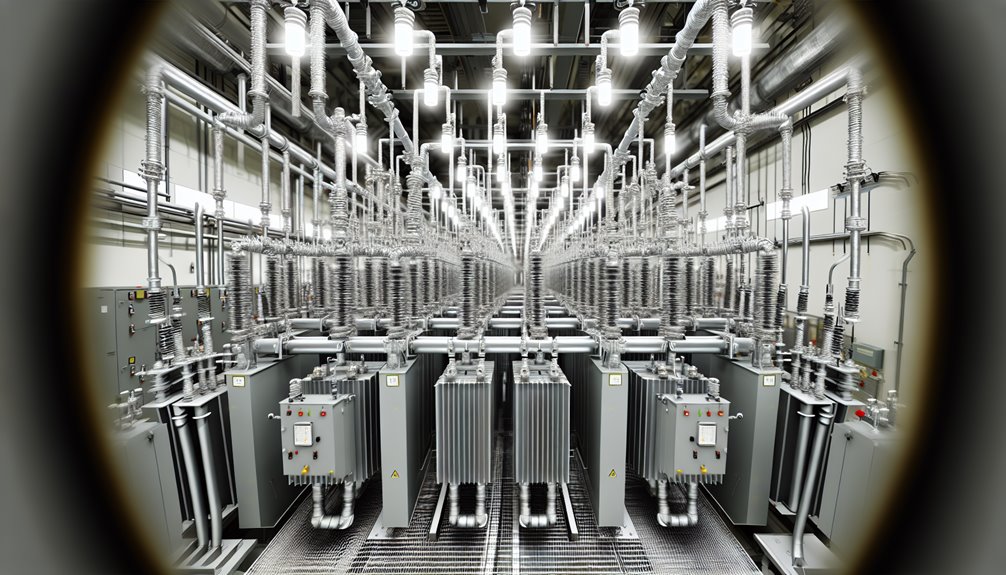
How do modern industries secure seamless operations and reliability? Robust power distribution systems are integral to achieving this.
Various industries depend on these systems to guarantee uninterrupted functionality:
These applications demonstrate the necessity for robust power infrastructure.
Guaranteeing uninterrupted operations across various industrial applications requires robust infrastructure, which hinges on adherence to stringent safety, compliance, and standards.
Compliance with IEC and IEEE standards is vital for maintaining operational integrity. Short-circuit ratings and arc-flash mitigation are essential considerations, preventing catastrophic failures and safeguarding personnel.
Adhering to IEC and IEEE standards ensures operational integrity, safety from short-circuits, and arc-flash protection.
Proper earthing and grounding strategies form the foundation of electrical safety, dissipating excess electrical energy efficiently. Regular inspection, testing, and documentation are mandated to guarantee systems operate within safe parameters, aligning with National Electrical Code (NEC) and NFPA 70E standards.
Employing licensed professionals for installations and upgrades is imperative to meet Occupational Safety and Health Administration (OSHA) regulations. These measures collectively guarantee resilience and reliability in power distribution systems.
Frequently, industrial power distribution projects encounter several challenges that can impede efficiency and reliability. These obstacles require meticulous attention to guarantee peak operation.
Proactive measures in design and regular maintenance are critical to mitigate these risks.
Why is selecting the right industrial power distribution solution so critical to operational success? Choosing the appropriate system guarantees reliability, safety, and cost-efficiency in facility operations. Key considerations include load analysis, expansion potential, environmental conditions, and cost evaluations. A thorough load analysis helps identify current and future power needs, while environmental conditions dictate equipment selection to withstand various constraints.
| Factor | Consideration |
|---|---|
| Load Analysis | Current and projected power requirements |
| Expansion Planning | Scalability options for future growth |
| Environmental Conditions | Suitability for indoor or outdoor environments |
| Installation Constraints | Space and accessibility limitations |
| Cost Assessment | Balancing lifecycle cost vs upfront expenditure |
These factors guide decision-making to optimize operational effectiveness. Selecting a solution aligned with facility requirements promotes uninterrupted performance, guaranteeing all components operate within safe and efficient parameters.
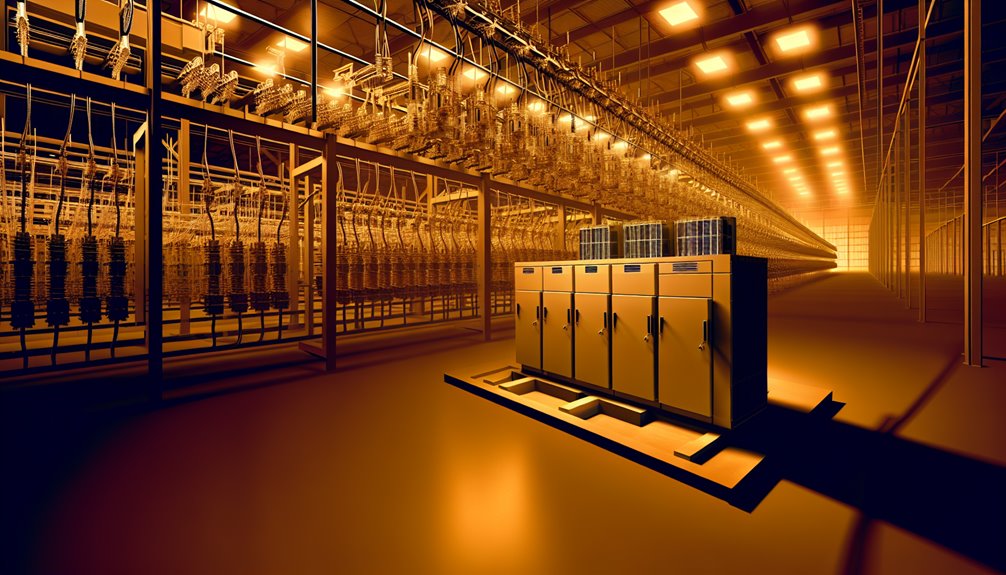
In the domain of industrial power distribution, the choice between integrated and component-based approaches is pivotal. Integrated systems offer streamlined solutions, emphasizing pre-engineered, cohesive designs for efficient deployment. Conversely, component-based approaches allow for tailored configurations, enabling engineers to select individual parts based on specific project requirements.
The decision hinges on several factors:
Each approach offers distinct advantages depending on operational priorities.
System-level design takes precedence over individual components in industrial power distribution due to its holistic approach to meeting operational demands. This design methodology guarantees that all components function synergistically, enhancing overall system reliability and efficiency.
Unlike focusing solely on individual elements, system-level design integrates components such as transformers, switchgear, and circuit protection into a cohesive framework. This integration minimizes potential points of failure and optimizes energy flow.
By evaluating the entire system's performance, engineers can anticipate challenges like voltage drops and harmonics, implementing preventive measures to mitigate them. Additionally, it supports scalability, allowing facilities to adapt to future expansions without significant redesigns.
Consequently, prioritizing system-level design is essential for maintaining uninterrupted operations and meeting stringent industrial requirements.
The latest trends in industrial power distribution technology show a 15% increase in smart grid adoption, emphasizing energy efficiency. Innovations include advanced IoT integration, renewable energy integration, and enhanced cybersecurity measures, transforming systems for improved reliability and operational effectiveness.
Industrial power distribution solutions enhance energy efficiency by optimizing voltage management, minimizing energy loss through advanced transformer designs, and improving power quality with harmonics reduction. Integrated monitoring systems enable precise load management, ensuring ideal energy usage across facilities.
Project management in power distribution solutions juxtaposes planning precision with execution fluidity, ensuring timely, budget-conscious completion. It orchestrates resources, mitigates risks, and aligns objectives, enhancing system reliability and efficiency while adhering to safety and compliance standards.
Power distribution solutions integrate with renewable energy sources by incorporating smart grid technologies, enabling seamless energy flow management, optimizing renewable energy usage, and enhancing grid stability through advanced monitoring, control systems, and energy storage integration for efficient power distribution.
Custom-designed power distribution systems offer benefits such as optimized energy efficiency, tailored capacity to meet specific operational needs, enhanced reliability, improved safety compliance, and scalability for future expansion, ensuring seamless integration with existing and emerging technologies.
In a manufacturing plant, akin to a symphony orchestra, each component of the power distribution solution plays a crucial role in maintaining harmony and efficiency. Just as a conductor guarantees all instruments work in unison, system-level design orchestrates transformers, switchgear, and protection systems to optimize performance. By integrating renewable energy and adhering to standards like IEC and IEEE, facilities achieve resilient operations, minimizing downtime and enhancing sustainability. Consequently, a cohesive approach guarantees industrial power systems perform seamlessly.
For projects requiring dependable and well-coordinated power distribution solutions, contact Conya to discuss system design and equipment options tailored to your operational and compliance requirements.
