Language

Electrical power solutions must reflect how and where they are used. Industrial facilities, commercial buildings, infrastructure projects, and renewable energy systems operate under very different load profiles, reliability expectations, and environmental constraints, making generic electrical designs increasingly ineffective.
When application context is ignored, power systems are often overbuilt, underperforming, or difficult to adapt over time. A system-level approach—focused on real operating conditions rather than isolated components—provides greater reliability, efficiency, and long-term flexibility.
This post outlines how electrical power solutions vary by industry and application, and why application-driven system planning is essential for modern power distribution projects.

Electrical power systems are shaped by context. Load characteristics, operating patterns, environmental exposure, and future expansion plans vary widely from one application to another, and these differences directly influence how a power solution should be designed and implemented.
In industrial environments, continuous operation, high starting currents, and process stability place emphasis on robustness and fault tolerance. Commercial buildings, by contrast, experience fluctuating demand, space constraints, and growing expectations around energy efficiency and intelligent control. Infrastructure projects introduce additional requirements such as long service life, redundancy, and strict compliance, while renewable energy and energy storage systems must accommodate bidirectional power flow and complex system integration.
When these variables are treated as interchangeable, electrical systems are often over-simplified or incorrectly specified. The result is not only technical inefficiency, but also increased operational risk, limited scalability, and higher long-term costs. An application-specific approach ensures that power distribution is aligned with real operating conditions, allowing systems to perform reliably from initial commissioning through future expansion.
Designing electrical power solutions around **application realities—rather than generic configurations—**creates a foundation for stability, flexibility, and sustainable performance across the full lifecycle of a project.
Power distribution projects often face similar constraints, regardless of application. These challenges typically appear during planning and design, but their impact is felt most strongly during operation and future expansion.
Common issues include:
Addressing these challenges requires a system-level approach that balances current performance with long-term operability, adaptability, and risk control across the full lifecycle of the electrical power system.
Electrical power requirements are shaped by how a facility operates, how critical continuity is, and how the system is expected to evolve over time. While core distribution principles remain consistent, each industry introduces distinct constraints that influence system architecture, equipment selection, and integration strategy.
Understanding these differences at an application level helps avoid over-standardised designs and ensures power systems remain reliable, adaptable, and aligned with real operating conditions.
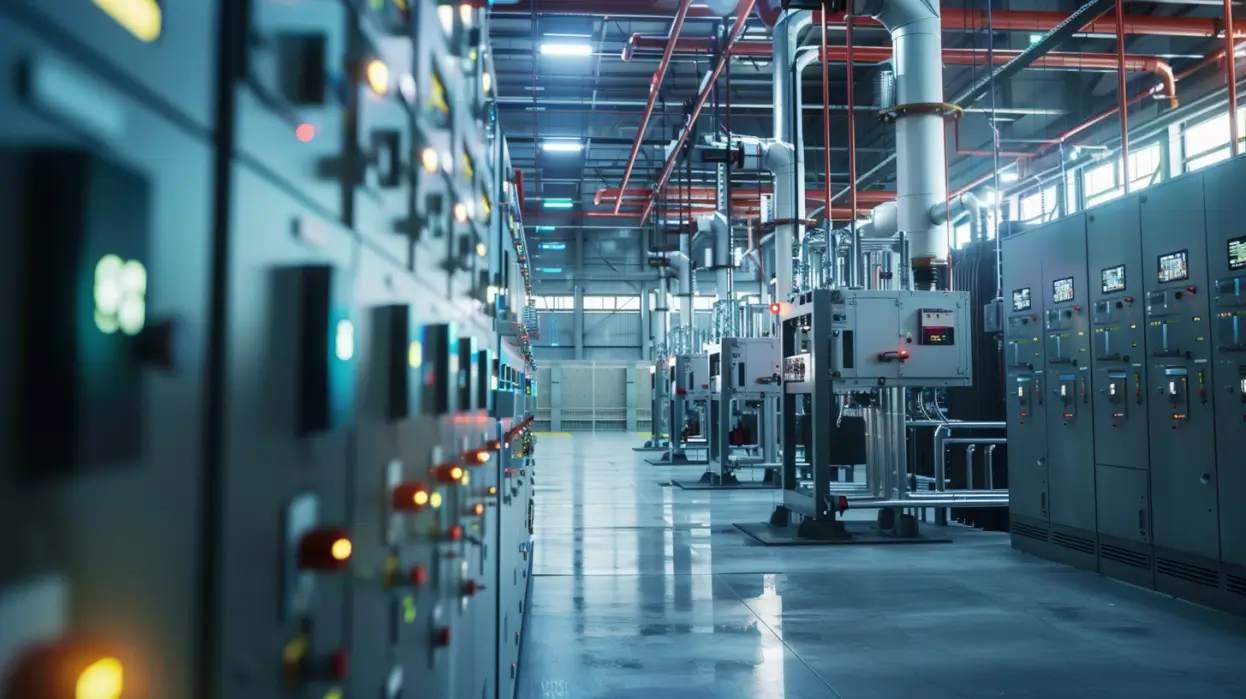
Manufacturing environments typically operate under continuous or near-continuous load, often with large motors, process-driven equipment, and high inrush currents. Even short power interruptions can disrupt production, affect product quality, or lead to significant downtime, making system stability a primary concern.
Power solutions in these settings prioritise robust distribution architectures, clear protection coordination, and predictable performance under sustained load. Layouts are usually designed to support maintenance and upgrades without interrupting critical processes, allowing production to continue as systems evolve.
Commercial buildings experience highly variable demand driven by occupancy patterns, tenant usage, and seasonal factors. Electrical systems must respond efficiently to fluctuating loads while fitting within architectural and spatial constraints that often limit equipment size and placement.
As a result, power solutions focus on flexibility, compact design, and integration with building management systems. Efficient load distribution, monitoring capability, and adaptability to future functional changes are essential for maintaining performance over the building’s lifecycle.
Infrastructure projects are defined by long service life, public safety requirements, and minimal tolerance for downtime. Electrical systems in these environments are expected to operate reliably over decades while meeting strict regulatory and documentation standards.
Power solutions are therefore designed with redundancy, fault isolation, and durability in mind. Equipment selection favours long-term reliability and environmental resistance, while system layouts support inspection, testing, and ongoing maintenance without compromising service continuity.
Renewable energy and energy storage systems introduce operating conditions that differ significantly from conventional distribution environments. Intermittent generation, bidirectional power flow, and complex interaction with grid infrastructure require careful coordination at the system level.
Effective power solutions in these projects emphasise integration rather than standalone equipment performance. Protection strategies, control systems, and distribution architecture must work together to accommodate changing generation profiles and evolving capacity requirements.
Large sites such as industrial parks and campuses typically combine multiple load types within a shared distribution network. Development is often phased, with capacity expanding over time as new facilities or functions are added.
Power solutions in these environments focus on scalability and structured distribution. Centralised oversight combined with decentralised control allows individual zones to operate independently while maintaining overall system coordination and long-term expansion flexibility.
An effective electrical power solution is defined not by individual devices, but by how its core components work together as a coordinated system. Each element plays a specific role in maintaining reliability, safety, and operational flexibility across different applications.
Power distribution equipment forms the backbone of the system, managing how electrical energy is received, segmented, and delivered to downstream loads. Its configuration influences fault isolation, load balance, and the ability to accommodate future capacity changes without major redesign.
Electrical enclosures and distribution cabinets provide both physical protection and organisational structure. Beyond housing components, they determine environmental resilience, accessibility for maintenance, and compliance with safety requirements in demanding operating conditions.
Busway and bus duct systems are often used where high current capacity, space efficiency, or modular expansion is required. Their design supports flexible routing and simplified upgrades, particularly in facilities where layout changes or phased development are expected.
Transformers and reactors enable voltage adaptation, system stabilisation, and load management. Their selection affects efficiency, thermal performance, and long-term operating costs, especially in applications with continuous or variable load profiles.
Monitoring, protection, and control systems tie the entire solution together. By coordinating protection devices, measurement, and control logic, these systems help maintain stability, support fault response, and provide visibility into system performance throughout its service life.
Together, these components form an integrated power solution that must be configured according to application-specific requirements rather than assembled as isolated parts.
Electrical power solutions succeed or fail based on how well design intent is carried through execution. Performance issues often arise not from equipment choice, but from gaps between design, manufacturing, testing, and commissioning.
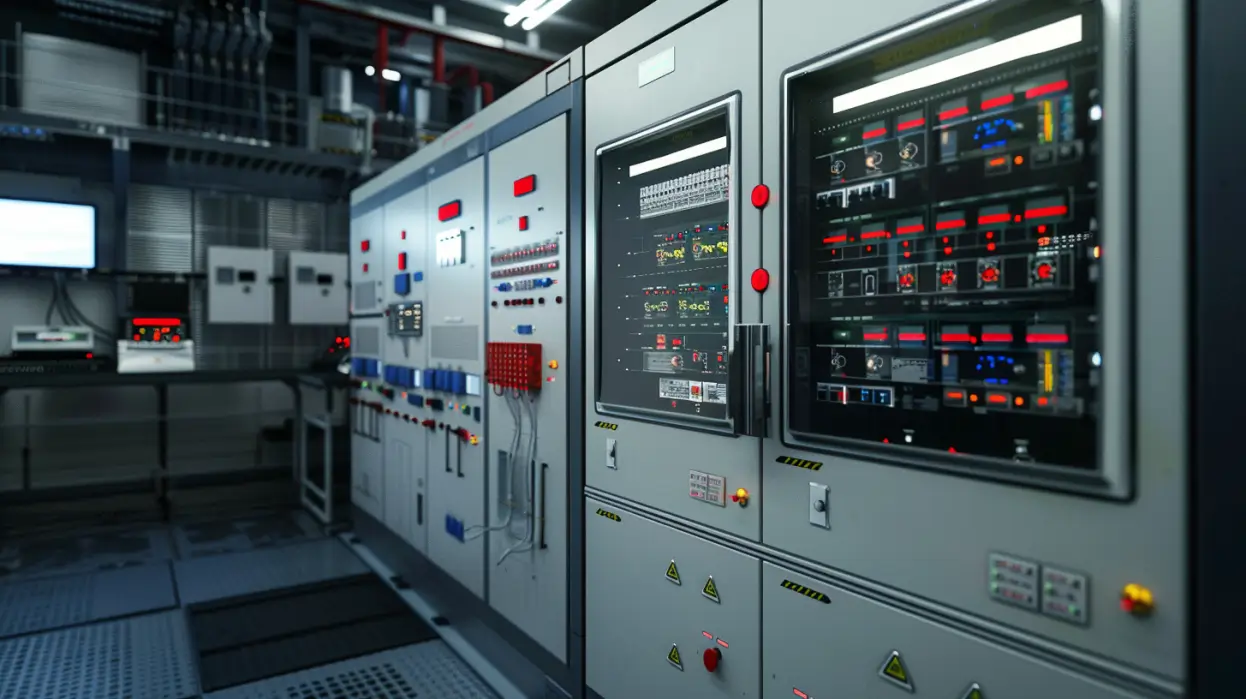
When these stages are aligned from the outset, project execution becomes more predictable, risks are reduced, and electrical power systems perform reliably throughout their service life.
Conya Electric is a power distribution equipment manufacturer and system solution provider with decades of experience in electrical engineering, manufacturing, and project delivery. The company designs and produces a wide range of power distribution equipment and system solutions used across industrial, commercial, infrastructure, and energy applications.
Building on this foundation, Conya supports electrical power projects through a system-oriented approach that connects engineering, manufacturing, and quality control with real operating conditions. Power solutions are developed around how electrical systems function as integrated networks, rather than as isolated pieces of equipment.
This approach emphasises application-fit system architecture, coordinated component selection, and controlled manufacturing processes. By maintaining alignment from early-stage planning through testing and delivery, electrical power solutions remain reliable, adaptable, and compliant throughout their service life—across different industries and project scales.
Every project brings its own operating conditions, constraints, and long-term objectives. Aligning electrical power systems with these realities from the outset helps reduce risk, improve reliability, and support future growth.
If you’re planning or reviewing a power distribution project and would like to explore an application-specific solution, our team is available to discuss system requirements, technical considerations, and project pathways.
Contact us to start a conversation about electrical power solutions designed around your application.
An application-specific solution is designed around how a power system will actually operate—including load behaviour, operating continuity, environmental conditions, and future expansion. Rather than applying a generic configuration, system architecture and component selection are aligned with real operating requirements.
Different industries place different demands on electrical systems. Manufacturing environments prioritise continuous operation and fault tolerance, while commercial buildings require flexibility and space efficiency. Infrastructure and energy projects introduce additional requirements around redundancy, integration, and long-term reliability. A uniform design approach often leads to inefficiencies or operational risk.
Power system planning is most effective when addressed early in the project lifecycle. Early consideration allows load growth, system integration, compliance, and installation constraints to be evaluated together, reducing the likelihood of redesigns or costly modifications later on.
Scalability determines how easily a power system can adapt to future changes. Systems designed with modular structures, clear expansion paths, and coordinated protection strategies are better able to accommodate load increases or functional changes without disrupting ongoing operations.
Long-term reliability depends on multiple factors, including system architecture, component coordination, environmental protection, testing quality, and execution consistency. Reliability is achieved not through individual devices alone, but through how the entire system is designed, integrated, and maintained throughout its service life.
