Language

The choice between centralized vs decentralized power distribution hinges on how each approach impacts efficiency, resilience, and overall system cost. Centralized power distribution systems rely on a single or limited number of distribution points, benefiting from economies of scale and simplified control. In contrast, decentralized power distribution systems distribute power closer to loads, offering greater flexibility, improved fault isolation, and easier integration of renewable energy sources.
Selecting between centralized and decentralized power distribution depends on factors such as load profiles, building layout, environmental conditions, scalability requirements, and regulatory constraints. Understanding the strengths and limitations of centralized vs decentralized power distribution is essential for designing systems that align with operational demands, reliability targets, and long-term sustainability goals.
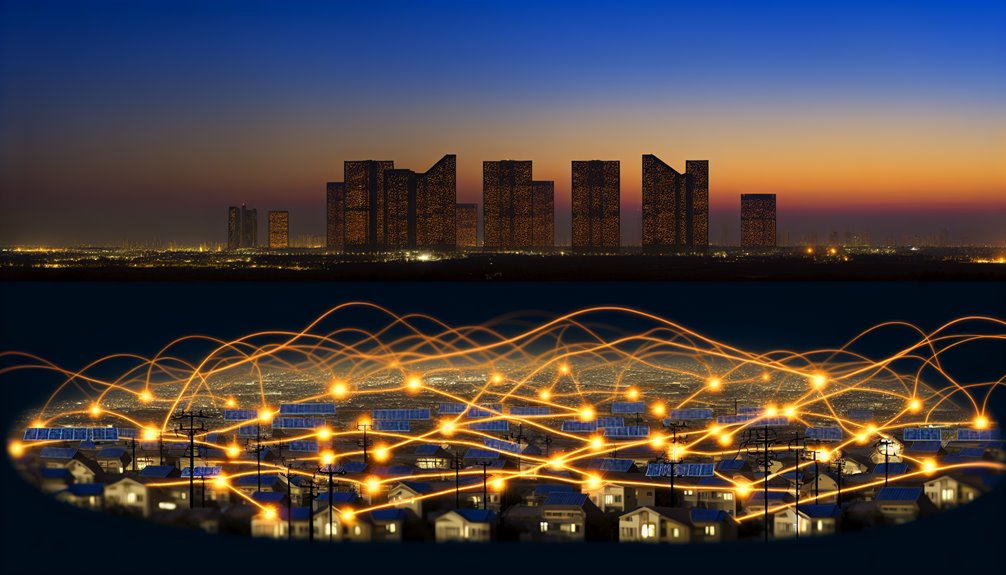
Centralized power distribution systems are mainly utilized in urban and densely populated regions where large-scale electricity generation is necessary to meet substantial demand efficiently.
These systems facilitate the transmission of electricity from central generation sites to numerous consumers via interconnected grid networks, optimizing economies of scale and minimizing per-unit production costs.
Additionally, centralized configurations are integral to data centers, offering streamlined maintenance and enhanced reliability through consolidated infrastructure and built-in redundancies.
In the domain of electrical distribution, the centralized power distribution system plays a pivotal role in serving large urban grids, heavy industry, and utilities. This system, integral to power distribution architecture, leverages legacy infrastructure and national grids to deliver electricity efficiently across vast areas.
Centralized vs decentralized power systems differ primarily in scale and application; centralized systems are designed to handle the extensive demands of populous regions and energy-intensive industries. The centralized model benefits from economies of scale, providing a cost-effective solution for substantial electricity generation.
Furthermore, its established infrastructure guarantees a reliable supply, essential for maintaining operational continuity in critical sectors. However, the reliance on a centralized framework necessitates robust maintenance and risk management to mitigate potential system vulnerabilities.
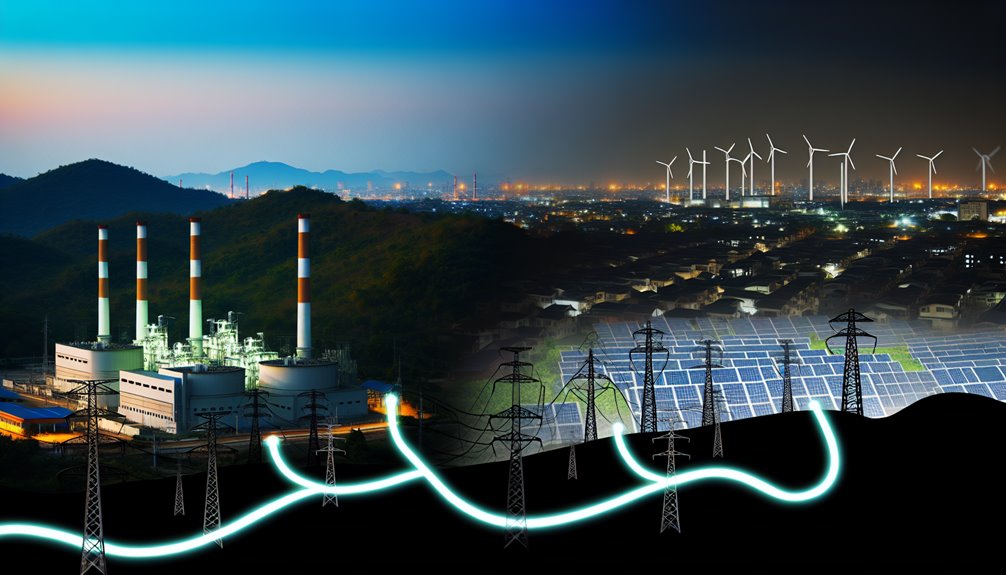
A decentralized power distribution system is characterized by the generation of electricity close to the point of consumption, often employing renewable energy technologies such as solar panels and wind turbines.
This approach facilitates the integration of distributed energy resources, including microgrids and small-scale generation units, which operate independently or in conjunction with the main grid.
Common applications encompass residential solar installations, community-based wind projects, and localized biomass generators, all of which enhance energy resilience, reduce transmission losses, and support a shift to sustainable energy models.
Decentralized power distribution systems, characterized by localized energy generation and consumption, have become increasingly prevalent in various sectors due to their adaptability and resilience.
These systems are particularly advantageous in contexts such as data centres and mission-critical facilities, where reliable power is paramount. By leveraging distributed power systems, these applications benefit from enhanced energy security and reduced dependency on centralized grids.
Industrial campuses also capitalize on decentralized power distribution, integrating renewable and hybrid energy systems to minimize emissions and optimize energy use.
In addition, microgrids offer tailored energy solutions, adapting to specific industrial requirements and ensuring continuous power supply. Such systems allow for precision control over energy resources, facilitating strategic energy management and contributing to sustainable and efficient power infrastructure development.
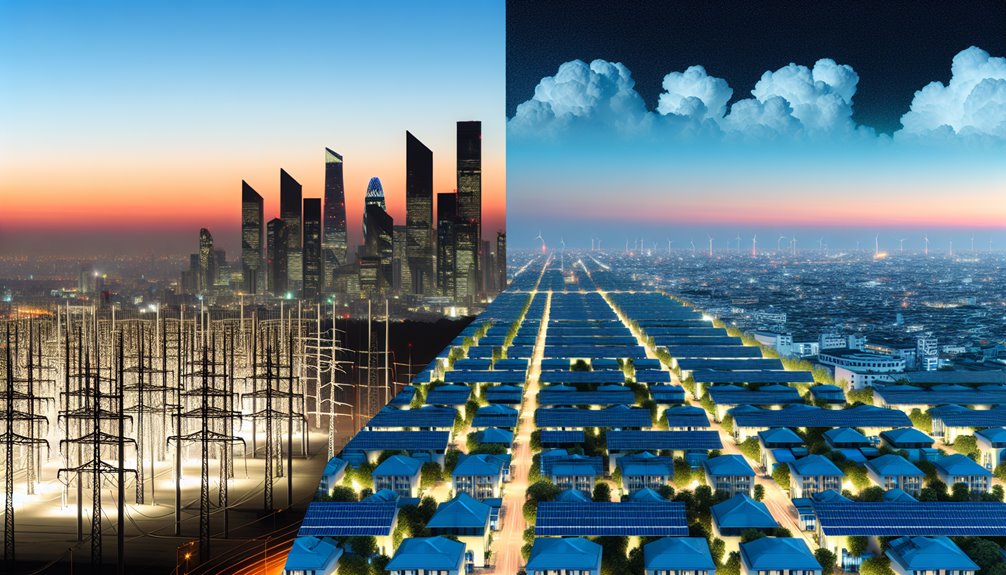
Centralized power distribution systems generate electricity at a singular, large-scale location, necessitating extensive transmission infrastructure that often results in significant distribution losses.
In contrast, decentralized systems produce energy closer to the point of consumption, thereby reducing transmission losses and enhancing overall efficiency.
While centralized systems benefit from streamlined control and management, decentralized systems introduce increased complexity due to their reliance on multiple, distributed energy sources.
Central power generation systems concentrate electricity production in large-scale facilities, typically located near fuel sources such as coal, natural gas, or nuclear material, optimizing economies of scale and providing consistent power output to vast regions through a network of high-capacity transmission lines.
This centralized power distribution leverages an electrical distribution design conducive to stable power system topology, ensuring reliability and cost-effectiveness.
In contrast, decentralized power generation occurs at distributed generation nodes, situated proximate to consumption points. These nodes often harness renewable resources, allowing for tailored energy solutions that align with localized demands.
While offering increased resilience and reduced transmission dependency, decentralized systems face challenges in achieving economies of scale, potentially impacting capacity and cost efficiency when compared to their centralized counterparts.
While examining the efficiency of power distribution systems, transmission and distribution losses emerge as a critical factor distinguishing centralized from decentralized models.
Centralized systems, with their extensive transmission networks, inherently experience higher losses due to long-distance power conveyance. This inefficiency arises from resistance in transmission lines, leading to energy dissipation as heat.
Conversely, decentralized models, employing a localized facility power distribution strategy, minimize these losses by situating generation close to consumption points. This proximity considerably reduces the distance electricity must travel, enhancing overall energy efficiency.
In addition, decentralized systems benefit from using renewable resources, aligning with sustainability goals. Consequently, the strategic placement of generation facilities in decentralized systems offers a compelling advantage in reducing transmission losses, improving grid efficiency, and ensuring energy resilience.
Due to the inherent differences in system architecture, centralized and decentralized power distribution systems exhibit distinct characteristics regarding complexity and control.
Centralized systems, characterized by large-scale generation and transmission, feature streamlined control mechanisms due to their fewer nodes and uniform infrastructure. These systems benefit from centralized decision-making, allowing efficient management of electricity flow and load balancing.
However, their complexity arises from the need to coordinate extensive transmission networks and handle large-scale disruptions, necessitating robust control systems.
Conversely, decentralized systems encompass numerous small-scale production units, leading to increased system complexity. This demands advanced distributed control strategies to manage localized energy production and consumption effectively.
Decentralized systems, while flexible and resilient, require sophisticated technology to guarantee seamless integration and real-time control across distributed nodes.
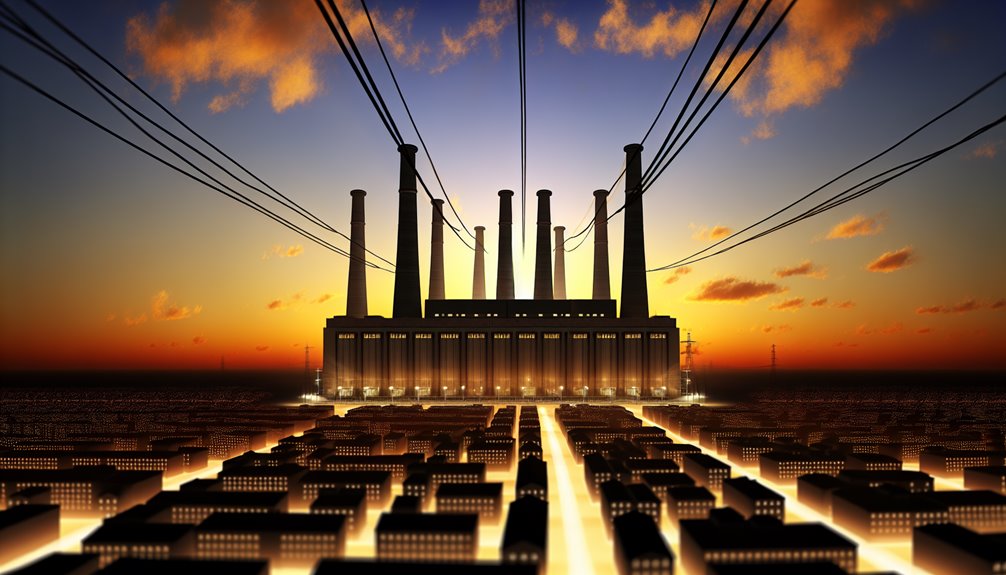
Centralized power distribution systems exhibit significant advantages, primarily through economies of scale, which enhance cost efficiency in large-scale electricity generation.
These systems benefit from high total generation capacity, allowing for a reliable and consistent power supply to densely populated areas.
In addition, mature regulatory frameworks provide a robust foundation for maintaining operational reliability and ensuring compliance with industry standards.
Despite the inherent advantages of centralized power distribution systems, such as enhanced efficiency and reliability due to economies of scale, these systems are not without limitations.
A significant constraint is the potential for single points of failure. Centralized systems concentrate power generation at a single location, making them susceptible to disruptions from natural disasters or deliberate attacks. Such vulnerabilities can lead to widespread outages, affecting large areas and populations.
Additionally, centralized systems exhibit limited adaptability to local demand fluctuations, often resulting in inefficiencies and underutilization of resources. The reliance on extensive transmission networks further exacerbates these issues, as any disruption in these networks can hinder power delivery.
Consequently, the inflexibility and potential for significant disruptions present notable challenges for centralized power distribution.
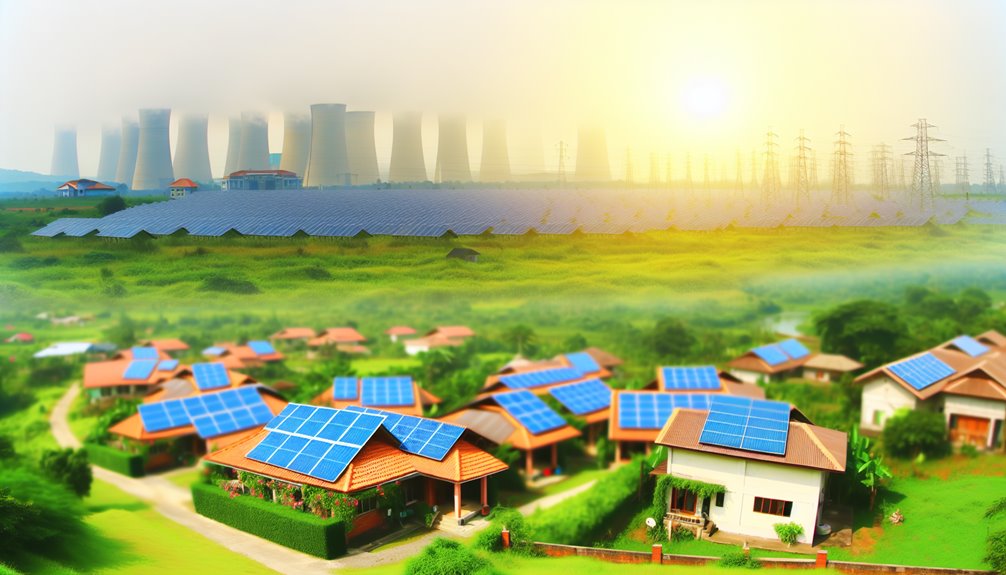
Decentralized power distribution systems offer increased resilience and redundancy by enabling localized power generation and storage capabilities.
This approach facilitates faster deployment and modular expansion, allowing for more adaptive and scalable energy solutions tailored to specific regional needs.
In addition, decentralized systems enhance the integration of renewable energy sources, promoting environmentally sustainable practices and reducing dependency on fossil fuels.
While decentralized power distribution systems offer notable advantages, they are not without limitations that merit careful consideration. The higher per-unit cost due to the absence of economies of scale presents a significant barrier. Additionally, decentralized systems often encounter capacity constraints, limiting their efficacy in meeting large-scale energy demands. The complexity involved in coordinating and maintaining numerous localized energy nodes also poses challenges, requiring increased investment in both financial and human resources.
| Key Limitation | Impact on Decentralized Systems |
|---|---|
| Higher per-unit cost | Increased financial burden |
| Capacity constraints | Inadequate for large demand |
| Coordination complexity | Elevated maintenance and resource needs |
These factors necessitate strategic planning to guarantee decentralized systems can be effectively integrated with existing energy infrastructures.
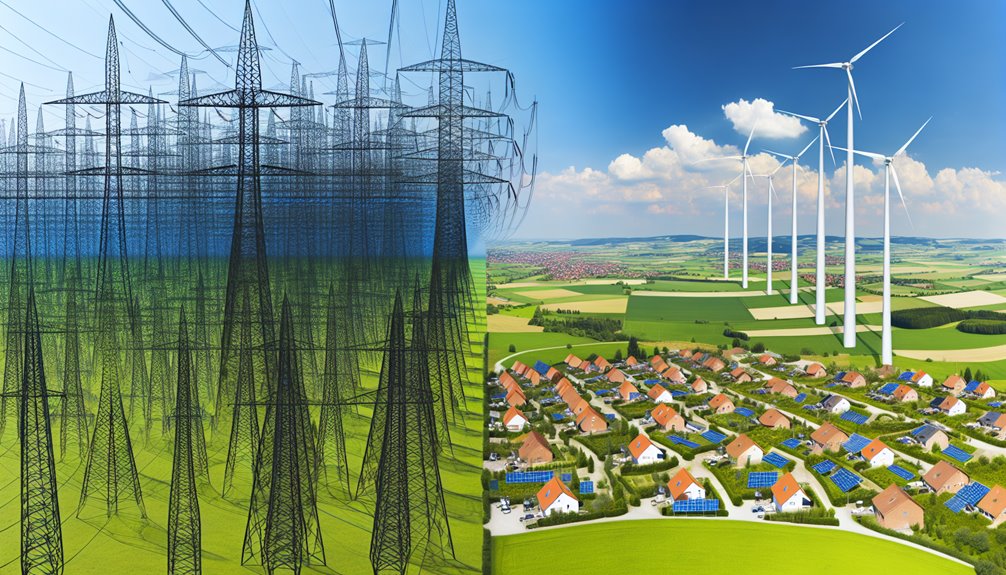
In the context of data centres and mission-critical facilities, centralized power distribution offers higher uptime through economies of scale and established redundancy protocols, but it may struggle with single-point-of-failure risks inherent in extensive networks.
Conversely, decentralized systems enhance fault isolation and offer bespoke energy solutions tailored to local requirements, although they may impose higher initial and maintenance costs to achieve similar service continuity.
The choice between centralized and decentralized configurations also depends on the geographic context, with urban environments typically benefiting from centralized efficiencies, while remote or rural areas may prefer the adaptability and resilience of decentralized approaches.
Data centers and mission-critical facilities, epitomes of technological infrastructure, demand exceptional reliability and efficiency in power distribution systems.
The pressing need for continuous operation necessitates choosing between centralized and decentralized power structures. Centralized systems offer streamlined control and substantial capacity, aligning with the extensive energy demands of such facilities. Their economies of scale guarantee cost-effective energy provision, though they may falter under centralized vulnerabilities like grid failures or natural disasters.
Conversely, decentralized power systems present modular designs with localized energy sources, offering resilience and adaptability. They reduce transmission dependencies and enhance disaster recovery capabilities. However, decentralized systems often incur higher costs and maintenance complexities due to their smaller scale, challenging the balance between reliability and operational efficiency.
Although centralized and decentralized power distribution systems each offer unique advantages, their efficacy regarding uptime, redundancy, and fault isolation varies considerably across real-world scenarios.
Centralized systems benefit from economies of scale, offering enhanced reliability due to fewer failure points and established infrastructure. However, they are susceptible to widespread outages and prolonged recovery times, particularly after natural disasters.
Conversely, decentralized systems, with their modularity, provide superior fault isolation and resilience, mitigating single points of failure. They enable localized, rapid restoration of services but may face limitations in scalability and cost efficiency.
Redundancy in decentralized systems is achieved through diverse generation sources, enhancing uptime but requiring substantial investment in infrastructure.
Ultimately, each system's effectiveness is dictated by its adaptability to specific operational demands and environmental conditions.
Analyzing the operational dynamics of power distribution systems, the impact of centralized and decentralized frameworks varies markedly between urban and rural settings.
In densely populated urban areas, centralized power systems demonstrate efficacy through economies of scale, ensuring consistent energy delivery and maintaining reliability due to established infrastructure. Urban grids leverage high-voltage transmission lines, facilitating efficient power flow to cater to large populations.
Conversely, remote or rural environments benefit considerably from decentralized systems. The proximity of energy generation to consumption points enhances resilience, reducing dependency on extensive transmission networks prone to disruptions. Decentralized systems cater to localized demands with renewable sources like solar panels and wind turbines, offering flexibility and reducing greenhouse gas emissions.
However, they may face challenges with limited capacity and higher costs.
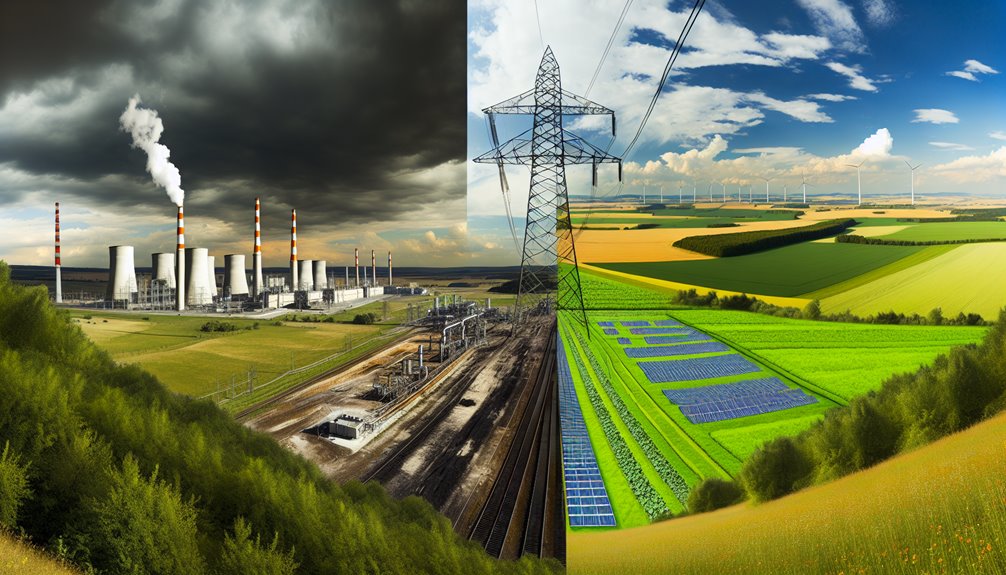
In evaluating centralized versus decentralized power distribution systems, a critical analysis of capital expenditure against operational flexibility reveals distinct trade-offs.
Centralized systems typically benefit from economies of scale, reducing per-unit costs but potentially increasing vulnerability to large-scale disruptions, underscoring the importance of reliable risk management strategies.
Conversely, decentralized systems offer enhanced resilience and a reduced failure impact radius, yet often incur higher initial costs and require adaptive disaster recovery protocols to maintain operational continuity.
When evaluating capital expenditure against operational flexibility, particularly concerning cost, resilience, and lifecycle considerations, stakeholders must assess the trade-offs inherent in infrastructure investment versus adaptive management strategies.
Centralized systems often necessitate substantial upfront infrastructure costs, leveraging economies of scale to achieve cost-effective, large-scale energy production. However, their inherent rigidity and extensive transmission networks limit adaptive responses to localized demands.
Conversely, decentralized systems promote operational flexibility through phased investments, accommodating renewable integration and localized needs. While decentralized systems exhibit higher per-unit costs due to limited economies of scale, they enhance resilience by reducing dependency on singular grid points susceptible to failures.
Lifecycle management in decentralized setups offers extended adaptability, supporting gradual upgrades in alignment with evolving technological advancements and policy requirements.
Reliability and risk management in power distribution systems necessitate a meticulous examination of cost, resilience, and lifecycle considerations. Centralized systems benefit from economies of scale, offering cost-effective solutions for large-scale electricity production. However, this cost advantage is counterbalanced by potential vulnerabilities to natural disasters and infrastructure failures, which can greatly impact reliability.
Conversely, decentralized systems, while incurring higher initial costs and maintenance expenditures, enhance resilience through localized energy production and reduced dependency on extensive transmission networks.
Lifecycle considerations highlight the adaptability of decentralized systems to integrate renewable sources, potentially lowering long-term environmental impacts. Both systems must carefully balance these factors to optimize reliability and risk management, ensuring sustainable and resilient power distribution.
Disaster recovery implications
Evaluating the failure impact radius of centralized versus decentralized power distribution systems reveals significant differences in disaster recovery implications.
Centralized systems, with their extensive transmission networks, present a substantial risk of large-scale outages. Their vulnerability to natural disasters and attacks necessitates thorough recovery strategies.
In contrast, decentralized systems offer localized resilience, reducing the impact radius but at a higher cost due to their modular nature.
Key considerations include:
In addressing the regulatory, ESG, and sustainability implications of power distribution systems, it is essential to recognize carbon footprint and emissions control as pivotal components of the energy discourse.
The alignment with Environmental, Social, and Governance (ESG) criteria and energy transformation goals necessitates extensive policy frameworks that incentivize low-carbon technologies. Decentralized power systems, which often leverage renewable energy, are increasingly supported by policy drivers aimed at reducing greenhouse gas emissions.
These regulations catalyze a shift towards distributed energy resources, promoting localized solutions that decrease reliance on fossil fuels. Conversely, centralized systems face heightened scrutiny due to their substantial ecological impact.
Consequently, regulatory landscapes are evolving to favor sustainable practices, aligning with global environmental objectives and encouraging innovation in energy distribution methodologies.
How does one effectively determine the ideal power distribution system for their needs? An analytical approach requires evaluating key decision factors.
First, consider load size and criticality to guarantee the system meets demand without interruptions.
Environmental conditions and site-specific constraints must be addressed to accommodate the infrastructure.
Future expansion plans are pivotal, as scalability will dictate long-term viability.
Regulatory constraints influence compliance with local and national standards, impacting system choice.
In scenarios where hybrid architectures are feasible, combining a centralized backbone with decentralized nodes can optimize efficiency and reliability.
Climate change intensifies operational challenges for both systems. Centralized grids face increased vulnerability to extreme weather events, while decentralized systems encounter integration issues with variable renewable energy sources, demanding robust adaptation strategies to guarantee system resilience and reliability.
Consumer behavior, akin to the butterfly effect, influences power system adoption by shaping demand patterns and preferences. This dictates investment in infrastructure, integration of renewable sources, and the development of adaptive technologies to meet evolving expectations.
Technological advancements, particularly in smart grid technology and energy storage solutions, greatly impact power distribution systems by enhancing grid reliability, enabling real-time data analytics, and facilitating efficient integration of renewable energy sources, thereby reshaping the energy landscape.
Centralized systems primarily face significant greenhouse gas emissions due to fossil fuel reliance, while decentralized systems encounter environmental challenges from resource-intensive battery production and land use changes for renewable installations, impacting ecosystems and biodiversity in localized areas.
Energy storage integration in centralized systems relies on large-scale facilities for efficient energy management, while decentralized systems utilize localized, smaller units, enhancing flexibility and resilience. Planning and technology selection are essential for optimizing functionality and reliability.
In the grand tapestry of energy distribution, both centralized and decentralized systems weave their unique threads. Centralized systems boast economies of scale but face challenges akin to Achilles' heel vulnerabilities. Conversely, decentralized systems offer robust resilience and green integration, albeit with intricate management complexities and elevated costs. Ultimately, the decision hinges on aligning specific energy demands with regulatory landscapes and sustainability goals, ensuring the chosen path harmonizes with both operational efficiency and environmental stewardship.
